
Introduction
Are you preparing your baby’s nursery and wondering how to organize all those tiny clothes, diapers, and toys sustainably? Creating an eco-friendly nursery storage system not only helps keep your space organized but also contributes to a healthier planet for your little one’s future. Today’s environmentally conscious parents are increasingly seeking sustainable alternatives to plastic containers and mass-produced furniture that often contain harmful chemicals and create unnecessary waste.
In this comprehensive guide, we’ll explore 15 beautiful, practical, and planet-friendly storage solutions that will help you create an organized, non-toxic nursery while teaching environmental values from day one. From handcrafted wooden shelving to sustainable baskets made from renewable materials, these solutions combine functionality with environmental responsibility—proving that you don’t need to sacrifice style or convenience to make eco-conscious choices for your baby’s first room.

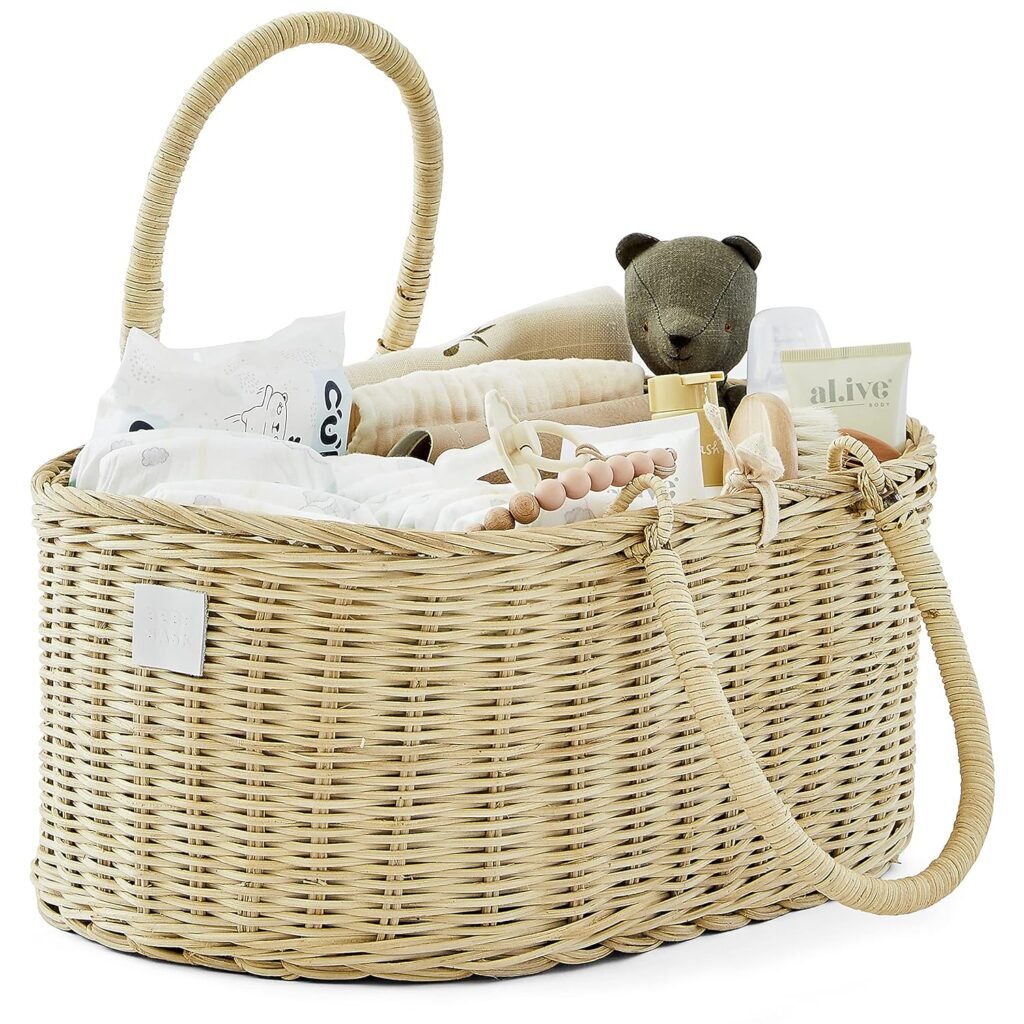
- POPPY SCALLOPED DIAPER CADDY – Discover the “Poppy” baby diaper caddy organizer in Natural from Bebe Bask’s collection. …
- A STATEMENT PIECE – crafted from 100% natural rattan with a durable, powder coated steel frame, these scalloped baskets …
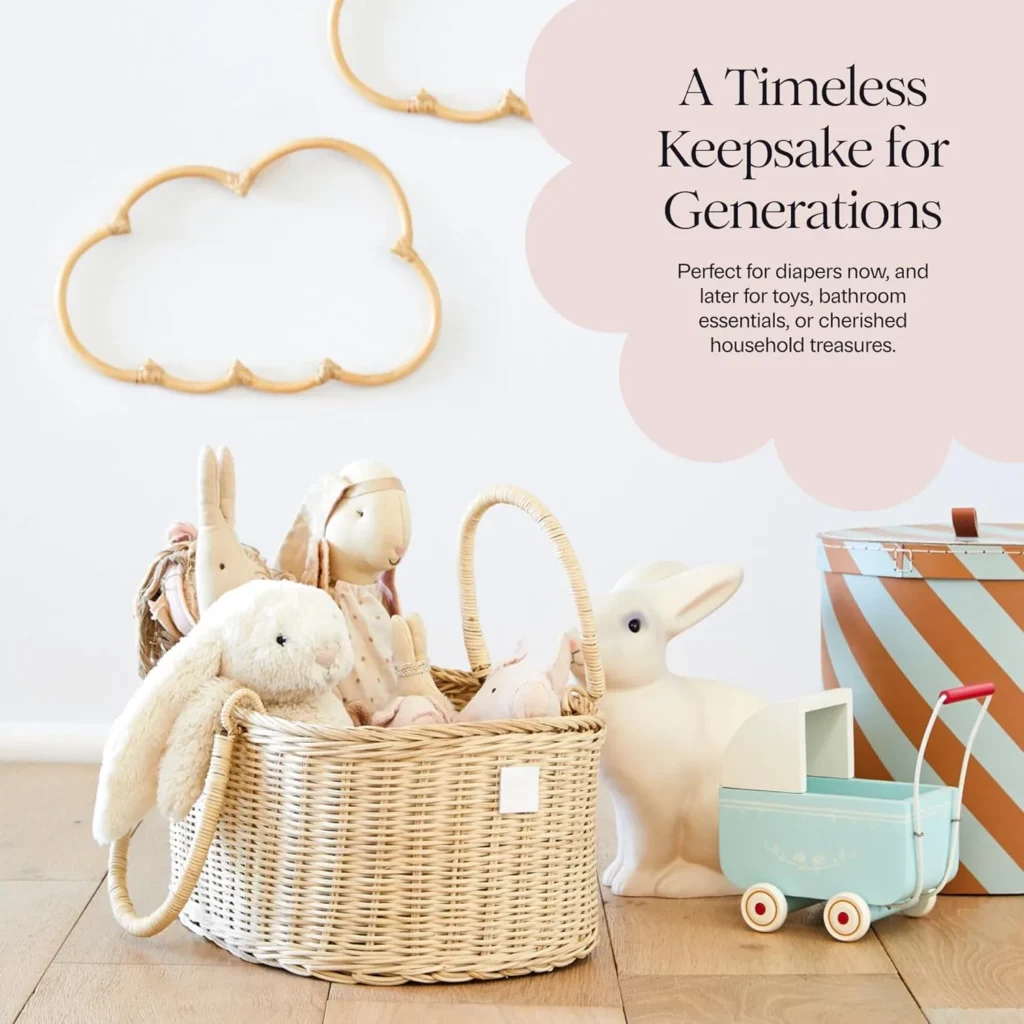
- HEIRLOOM FOR GENERATIONS – Experience timeless charm with our wicker-style diaper caddie, perfect for any changing table…
- REMOVABLE DIVIDER – Made in softly cushioned cotton, it effortlessly structures your space into three distinct sections …
- MULTIPURPOSE BASKET – This versatile diaper basket caddy transcends its primary use with ease. Whether you keep the diap…
- GENDER NEUTRAL BABY SHOWER BASKET – “Poppy” portable diaper caddy is deal for gifting, this natural diaper caddy can be …
- SOPHISTICATED DUO – Elevate your boho nursery by pairing the Poppy storage diaper caddy with the Florence baby changing …
- CREATE A NATURAL OASIS – Infuse serenity and style into your nursery with Bebe Bask’s complete scallop series. Each piec…
- 100% HANDCRAFTED BY MAMAS FOR MAMAS – Skilled artisan mamas lovingly handmake each diaper caddie organizer in the comfor…
Understanding Eco-Friendly Nursery Storage – What Every Parent Should Know
What is Eco-Friendly Nursery Storage?
Eco-friendly nursery storage refers to organization solutions made from sustainable, renewable, or recycled materials that have minimal environmental impact throughout their lifecycle. These products are typically:
- Crafted from responsibly sourced natural materials like bamboo, organic cotton, or sustainably harvested wood
- Free from harmful chemicals, VOCs, and toxins common in conventional storage products
- Produced using environmentally responsible manufacturing processes
- Designed for longevity and biodegradability at end-of-life
- Often handmade or locally produced to reduce carbon footprint
Unlike conventional plastic bins or particleboard furniture that off-gas chemicals and eventually end up in landfills, eco-friendly options prioritize both planetary and human health while still providing practical storage solutions for all your baby’s essentials.
Why Eco-Friendly Nursery Storage Matters for Your Baby’s Development
Creating a sustainable nursery environment isn’t just good for the planet—it’s beneficial for your baby’s health and development too. Babies are particularly vulnerable to environmental toxins because:
- Their immune systems are still developing
- They breathe more air per pound of body weight than adults
- They frequently put items in their mouths
- Their developing systems can be sensitive to chemical exposure
By choosing eco-friendly nursery storage solutions made from natural materials, you’re reducing your baby’s exposure to potentially harmful substances like phthalates, formaldehyde, and flame retardants commonly found in conventional furniture and plastic storage bins.
Additionally, surrounding your child with beautiful natural materials creates a calming, sensory-rich environment that supports healthy development. Natural textures, subtle variations in color, and organic shapes provide visual and tactile complexity that synthetic materials simply can’t match.

- Organize Your Home, Simplify Your Life! Tired of clutter? Our 25x17x16.1-inch square cotton rope storage basket offers s…
- Easy to Carry, Effortless to Move! Designed with sturdy, oversized handles, this lightweight square basket is easy to li…
- Stylish and Functional for Every Space! Crafted with handwoven cotton rope and available in vibrant colors, this square …
- Versatile Storage for Your Entire Home! Store kids’ toys, blankets, pillows, towels, toiletries, clothes, and accessorie…
- Eco-Friendly and Built to Last! Made from natural cotton rope, this square basket is breathable, durable, and easy to ma…
Common Myths About Eco-Friendly Nursery Storage
Myth 1: Eco-friendly options are always more expensive.
While some sustainable products carry premium prices, many affordable options exist. Secondhand wooden furniture, repurposed household items, and DIY solutions can be budget-friendly alternatives that are just as eco-conscious as new purchases.
Myth 2: Natural materials aren’t durable enough for baby items.
In reality, many natural materials like bamboo, solid wood, and wool are incredibly durable—often outlasting their plastic counterparts. Many sustainable products are designed to grow with your child or be repurposed for other uses.
Myth 3: Eco-friendly means sacrificing style.
Today’s sustainable nursery products come in a wide variety of aesthetics, from minimalist Scandinavian designs to colorful bohemian styles. Many eco-friendly brands prioritize beautiful design alongside sustainability.
Myth 4: Natural materials aren’t practical for cleaning.
While some natural materials require specific care, many (like organic cotton) are machine-washable, and solid surfaces like bamboo or wood can be easily wiped clean with non-toxic cleaners.
Essential Items & Supplies for Eco-Friendly Nursery Storage
Must-Have Products for Eco-Friendly Nursery Storage
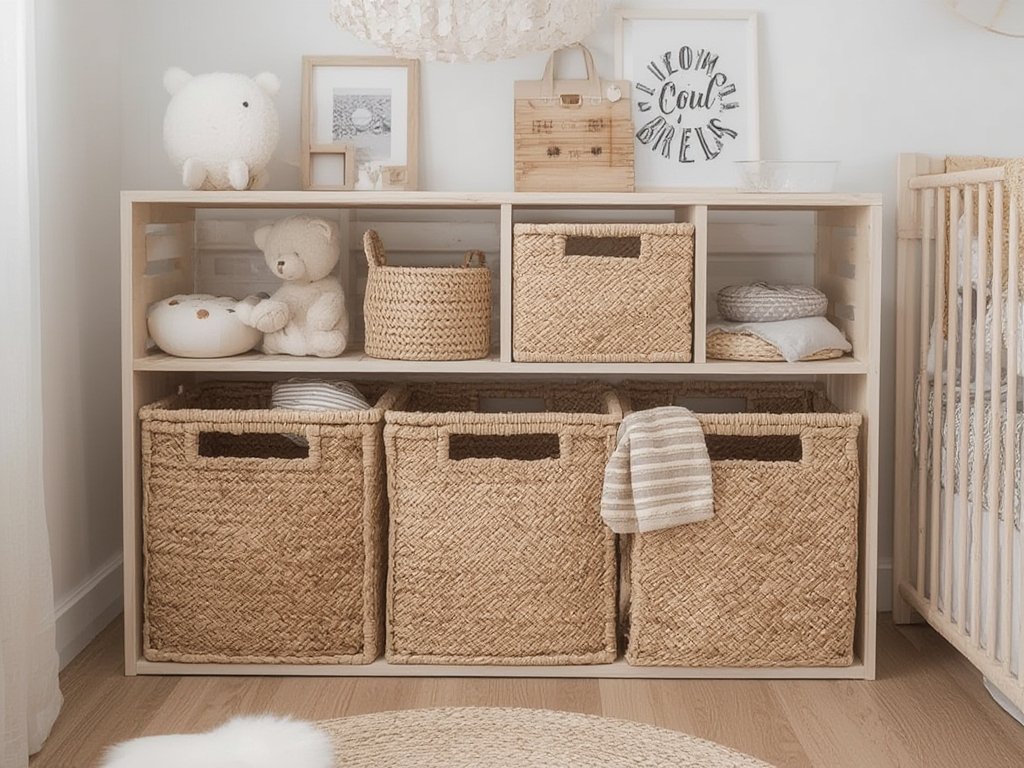
Wooden Wall Shelving: Open shelving made from FSC-certified wood provides versatile storage while adding a design element to your nursery. Look for untreated or non-toxic finishes.
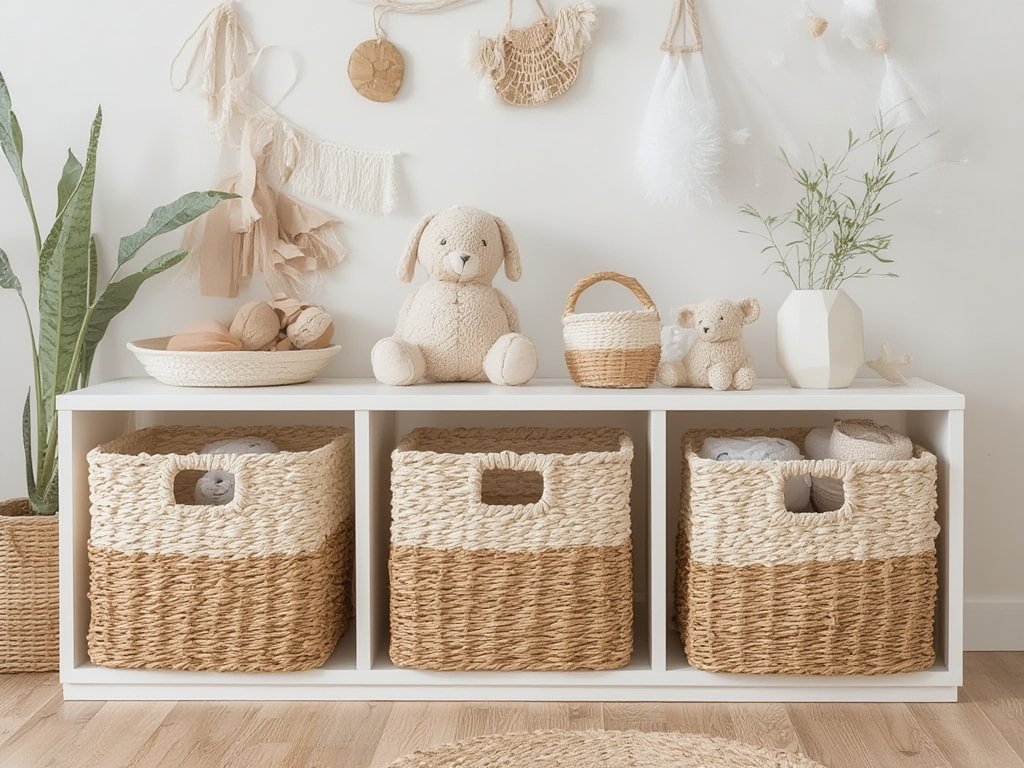
Natural Fiber Storage Bins: Sustainable baskets made from seagrass, water hyacinth, or jute are perfect for storing diapers, toys, and blankets while adding texture to your space.
Organic Cotton Storage Bags: Drawstring bags made from GOTS-certified organic cotton are perfect for organizing smaller items like socks, pacifiers, or bath supplies.
Bamboo Drawer Dividers: Keep tiny clothes organized with dividers made from rapidly renewable bamboo instead of plastic alternatives.
Wooden Toy Chests: A classic storage solution made from sustainable wood provides ample space for toys while avoiding plastic materials.
| Storage Need | Eco-Friendly Option | Benefits |
|---|---|---|
| Clothing | Bamboo drawer dividers | Renewable material, naturally antibacterial |
| Diapers & Wipes | Seagrass baskets | Breathable, biodegradable, attractive |
| Toys | Wooden toy chest | Durable, free of toxins, grows with child |
| Books | Wall-mounted wood shelves | Displays books for easy access, saves floor space |
| Blankets | Macramé hanging storage | Decorative, space-saving, natural cotton |
Optional but Helpful Items
Under-Crib Storage Solutions: Fabric drawers made from organic cotton or hemp that utilize the often-wasted space beneath the crib.
Wall-Mounted Fabric Organizers: Multi-pocket hangers made from organic cotton or linen provide vertical storage without requiring floor space.
Wooden Peg Rails: A simple row of wooden pegs mounted at child-height provides accessible storage for jackets, bags, and toys.
Reclaimed Wood Floating Shelves: Add character and storage space with shelving made from reclaimed barn wood or salvaged lumber.
Rope Storage Baskets: Handwoven cotton rope baskets offer a softer alternative to rigid storage bins for stuffed animals or blankets.
Budget-Friendly Alternatives
Creating eco-friendly nursery storage doesn’t have to break the bank. Consider these affordable alternatives:
Repurpose Cardboard Boxes: Cover sturdy boxes with organic cotton fabric or non-toxic paper for custom storage bins.
Thrift Store Finds: Look for solid wood furniture at secondhand stores that can be refinished with non-toxic paint or sealants.
DIY Fabric Bins: Sew simple storage cubes from organic cotton canvas or repurposed fabric.
Repurposed Household Items: Woven baskets, wooden crates, or vintage suitcases from around your home make charming storage solutions.
Pallet Wood Projects: Create simple shelves or toy bins from reclaimed pallet wood (ensure they’re heat-treated, not chemically treated).
Guide to Eco-Friendly Nursery Storage
Preparation Steps
Before implementing your eco-friendly nursery storage system:
Assess Your Specific Needs: Take inventory of what items you’ll need to store, considering both immediate newborn needs and future growth.
Measure Your Space: Carefully measure the nursery to determine what size storage solutions will fit comfortably without overcrowding.
Research Materials: Learn about the sustainability credentials of different materials to make informed choices (bamboo vs. rattan, organic cotton vs. conventional).
Create Zones: Plan distinct areas for different activities—diapering, feeding, sleeping, and play—each with appropriate storage.
Consider Air Quality: Choose products with low or no VOCs, particularly for larger furniture pieces, to maintain healthy indoor air quality.
Implementation Process
Follow these steps to set up an effective eco-friendly nursery storage system:
Start with Furniture Placement: Position larger storage pieces like dressers and shelving units first, ensuring they’re secured to walls for safety.
Organize by Frequency of Use: Place daily essentials like diapers and frequently worn clothes in the most accessible storage areas.
Implement Vertical Storage: Maximize small spaces by using wall-mounted shelves and hanging organizers to utilize vertical space.
Label Naturally: Use wooden tags, fabric labels, or chalk markers on blackboard paint for identifying container contents without plastic labels.
Create Open and Closed Storage: Balance aesthetically pleasing open shelving for displaying books and toys with closed storage for less visually appealing items.
Keep Floor Space Clear: Prioritize storage solutions that don’t take up valuable floor space to create a more spacious environment.
Troubleshooting Common Issues
Problem: Limited Space
Solution: Utilize multi-functional furniture like storage ottomans made from natural materials or beds with under-bed storage compartments. Wall-mounted sustainable baskets also maximize vertical space.
Problem: Moisture Concerns
Solution: In humid climates, ensure proper ventilation and choose naturally mold-resistant materials like cedar for closet storage. Avoid storing organic textiles in completely sealed containers.
Problem: Budget Constraints
Solution: Prioritize eco-friendly storage for items your baby directly contacts, then gradually replace other pieces. Mix DIY solutions with key purchased items for maximum impact with minimal expense.
Problem: Changing Storage Needs
Solution: Choose modular, adaptable storage systems that can be reconfigured as your child grows and their needs change. Open shelving with movable sustainable baskets offers flexibility.
Top 5 Benefits of Eco-Friendly Nursery Storage for Baby & Parents
Developmental & Health Benefits for Baby
Reduced Chemical Exposure: Eco-friendly nursery storage made from natural materials minimizes your baby’s exposure to VOCs, flame retardants, and phthalates commonly found in conventional storage products.
Enhanced Sensory Experience: Natural materials provide varied textures, subtle scents, and organic visual patterns that stimulate a baby’s developing senses in a gentle, non-overwhelming way.
Better Indoor Air Quality: Sustainable materials typically off-gas fewer chemicals than conventional alternatives, contributing to cleaner air in your baby’s room, supporting respiratory health.
Early Environmental Education: Even from infancy, surrounding your child with natural materials creates an implicit connection to nature and sustainability that forms the foundation for environmental values.
Temperature Regulation: Natural fibers used in storage bins and organizers help regulate humidity and temperature better than synthetic alternatives, creating a more comfortable sleep environment.
Advantages for Parents
Implementing eco-friendly nursery storage offers numerous benefits beyond organization:
Peace of Mind: Knowing your storage solutions don’t contain harmful chemicals provides reassurance during a time when parents are particularly concerned about their baby’s environment.
Durability and Longevity: High-quality sustainable materials often outlast conventional alternatives, potentially saving money over time despite higher initial costs.
Aesthetic Appeal: Natural materials like wood, bamboo, and woven fibers add warmth, texture, and timeless style to your nursery, creating a space that’s pleasurable for parents to spend time in.
Versatility: Many eco-friendly storage solutions can be repurposed as your child grows or moved to other rooms in your home, extending their useful life.
Alignment with Values: For environmentally conscious parents, creating a sustainable nursery allows for consistency between personal values and parenting choices.
Long-Term Impact on Family Wellbeing
The benefits of eco-friendly nursery storage extend beyond infancy:
Establishing Healthy Habits: Starting with sustainable storage sets a foundation for ongoing environmental consciousness in family purchasing decisions.
Creating Environmental Stewards: Children raised in environments that prioritize sustainability often develop stronger connections to nature and environmental responsibility.
Reducing Family Carbon Footprint: Choosing renewable, biodegradable materials helps minimize your family’s environmental impact over time.
Financial Wisdom: Investing in quality, timeless storage pieces often proves more economical than repeatedly replacing cheaper, less durable options.
Home Harmony: Natural materials and organized spaces contribute to a sense of calm in the home, benefiting the entire family’s mental wellbeing.
Expert Tips, Alternative Methods & Age-Specific Advice
Tips for Newborns (0-3 Months)
During the newborn phase, eco-friendly nursery storage should prioritize accessibility and organization:
Create a diapering station with essential supplies in labeled, open sustainable baskets within arm’s reach of the changing table.
Use drawer dividers made from bamboo to organize tiny clothes by type and size.
Install a wall-mounted shelf above the changing table (out of baby’s reach) for storing less frequently used items.
Utilize under-crib space with cotton canvas drawers for storing extra bedding and seasonal clothing.
Set up a breastfeeding/bottle feeding station with necessary supplies in a portable seagrass basket that can move from room to room.
Adjustments for Older Babies & Toddlers (3+ Months)
As your baby grows, your eco-friendly nursery storage needs will evolve:
Transition to lower, accessible storage for toys as babies become mobile, using lidless rattan baskets for easy access.
Install child-height wooden pegs or hooks for hanging favorite outfits or dress-up clothes when toddlers begin expressing preferences.
Create a book nook with forward-facing bamboo shelves that display book covers for emerging readers.
Introduce labeled storage to support early organization skills, using picture labels for pre-readers.
Consider modular, stackable wooden storage cubes that can be reconfigured as needs change.
Alternative Methods & Different Parenting Styles
Eco-friendly nursery storage can be adapted to complement various parenting philosophies:
Montessori Approach:
- Prioritize low, open shelving with a limited selection of toys in natural baskets
- Utilize child-sized furniture with built-in storage that supports independence
- Implement picture-labeled containers to encourage self-directed organization
- Choose natural materials that provide sensory-rich experiences
Minimalist Parenting:
- Select multi-purpose furniture like storage benches or ottomans made from sustainable materials
- Opt for hidden storage solutions to maintain clean, uncluttered visual spaces
- Implement regular rotation of toys and books using closed storage for items not currently in use
- Choose neutral, natural storage pieces that blend seamlessly with the environment
Small Space Living:
- Maximize vertical storage with wall-mounted shelving made from reclaimed wood
- Utilize hanging storage solutions like macramé organizers or over-door canvas pockets
- Choose nesting sustainable baskets that can be collapsed when not in use
- Select furniture with built-in storage like cribs with drawers underneath
Conclusion
Creating an eco-friendly nursery storage system is one of the most impactful ways to align your parenting choices with environmental values. By choosing sustainable materials, supporting ethical manufacturers, and prioritizing non-toxic options, you’re not only creating a beautiful, organized space for your baby but also contributing to the healthier planet they’ll inherit.
Remember that perfection isn’t the goal—even implementing a few sustainable storage solutions makes a positive difference. Start with the items your baby will interact with most directly, then gradually expand your eco-friendly nursery storage system as budget and time allow.
The thoughtful organization systems you establish now will grow and evolve with your child, potentially setting the foundation for lifelong habits of mindful consumption and respect for natural materials. From sustainable baskets for toy storage to handcrafted wooden shelving for books, each eco-conscious choice represents an investment in both your child’s immediate environment and their future world.
We’d love to hear about your experiences with eco-friendly nursery storage solutions! Share your favorite sustainable organization tips or photos of your natural nursery in the comments below. For more parenting advice that prioritizes both baby and planet, explore our related articles on sustainable baby care practices.
FAQs
What materials should I look for in eco-friendly nursery storage?
When selecting eco-friendly nursery storage, prioritize renewable and biodegradable materials including solid wood (preferably FSC-certified), bamboo, rattan, seagrass, jute, organic cotton, hemp, and wool. These materials are not only sustainable but also free from the harmful chemicals commonly found in plastic storage containers and particleboard furniture.
Look for natural finishes like beeswax, plant-based oils, or water-based non-toxic paints rather than conventional varnishes that may contain VOCs. For fabric storage items, GOTS-certified organic cotton ensures both environmental sustainability and safety for your baby. Additionally, consider the durability of materials—high-quality eco-friendly nursery storage solutions should last through multiple children or be biodegradable at end-of-life, reducing overall environmental impact.
How can I create eco-friendly nursery storage on a tight budget?
Creating eco-friendly nursery storage doesn’t have to be expensive. Start by repurposing items you already own—wooden crates, sturdy cardboard boxes covered in natural fabric, or vintage suitcases make charming storage containers. Explore thrift stores and secondhand marketplaces for solid wood furniture that can be refreshed with non-toxic paint or simply cleaned and oiled. Consider DIY projects using reclaimed materials, like simple shelving from salvaged wood or storage bins sewn from outgrown organic clothing or linens.
Prioritize your spending on a few key pieces that will see heavy use, like changing table storage or toy organizers. Remember that eco-friendly nursery storage can be gradually implemented—start with essential items and add pieces over time as your budget allows, focusing first on items that directly contact your baby’s belongings.
How should I organize toys using eco-friendly nursery storage solutions?
Organizing toys with eco-friendly nursery storage works best with a developmental approach. Use low, accessible sustainable baskets for frequently used toys, keeping them within your child’s reach to encourage independence and cleanup skills. Consider categorizing toys by type (building blocks, stuffed animals, musical instruments) and storing each category in a dedicated container, using picture labels for easy identification. For Montessori-inspired organization, display a limited rotation of toys on open bamboo shelving, storing excess toys in closed cotton bins to reduce visual overwhelm and maintain interest.
Wall-mounted storage keeps floor space clear while displaying favorite items. Incorporate a variety of eco-friendly nursery storage solutions like hanging macramé organizers for stuffed animals, wooden crates for larger toys, and small seagrass baskets for tiny manipulatives, ensuring each item has a dedicated place that makes sense to both you and your child.
Can eco-friendly nursery storage solutions be cleaned and sanitized effectively?
Yes, eco-friendly nursery storage can be effectively cleaned and sanitized using natural methods. For wooden storage items, wipe with a mixture of equal parts white vinegar and water to disinfect surfaces without harsh chemicals. Most bamboo storage solutions can be cleaned the same way but should be dried thoroughly to prevent warping. Natural fiber sustainable baskets like seagrass or jute should be dusted regularly and spot-cleaned with a damp cloth when necessary, avoiding soaking which can damage the fibers.
Fabric storage containers made from organic cotton are typically machine washable—use hot water and plant-based detergent for sanitizing. For stubborn stains or deeper cleaning, hydrogen peroxide or baking soda paste provides natural disinfection. Sunlight is also a powerful natural sanitizer—when possible, place eco-friendly nursery storage items in direct sunlight periodically to kill bacteria and reduce odors naturally.
What are the best eco-friendly storage solutions for small nursery spaces?
In small nurseries, eco-friendly nursery storage requires maximizing vertical space and choosing multi-functional pieces. Wall-mounted bamboo shelving installed at varying heights provides storage without consuming floor space. Under-crib storage using organic cotton drawers utilizes otherwise wasted space. Consider furniture that serves dual purposes, like an organic cotton storage ottoman that provides seating and toy storage, or a changing table with built-in bamboo drawers. Hanging solutions like macramé pocket organizers on the back of doors or cotton fabric wall pockets add storage without claiming valuable floor area.
Nesting sustainable baskets can be expanded when needed and collapsed when not in use. For clothing storage, consider a capsule wardrobe approach with seasonal rotation, storing off-season items in under-bed hemp storage bags. Look for corner shelving units made from sustainable wood to utilize awkward spaces, and remember that thoughtfully chosen eco-friendly nursery storage solutions not only save space but can double as beautiful design elements in your compact nursery.