Introduction
Did you know that a baby’s skin is 20-30% thinner than an adult’s? This makes your little one extra sensitive to water temperature during bath time. Getting the baby bath temperature just right isn’t just about comfort—it’s crucial for your infant’s safety and wellbeing. As a new parent, the fear of accidentally making the water too hot or too cold can turn what should be a bonding experience into a stressful situation.
In this comprehensive guide, we’ll explore everything you need to know about creating the perfect bathing environment for your little one. From ideal temperature ranges to essential safety tools, bathing techniques for different ages, and common mistakes to avoid—we’ve got you covered. By the end, you’ll feel confident in creating a safe bath for baby every time, turning this daily routine into an enjoyable moment for both of you.
Understanding Baby Bath Temperature – What Every Parent Should Know
What is Baby Bath Temperature?
Baby bath temperature refers to the optimal water warmth needed for safely bathing an infant. Unlike adults who enjoy hotter baths, babies require a narrow temperature range—typically between 97-100°F (36.1-37.8°C). This specific range is crucial because it closely matches a baby’s internal body temperature, preventing thermal shock while keeping them comfortable.
Proper temperature measurement isn’t just a suggestion; it’s a vital safety precaution that helps prevent scalding, which can happen in just seconds on delicate infant skin. While adults can quickly adjust to or move away from uncomfortable water temperatures, babies cannot, making accurate temperature control an essential part of infant bathing safety.
Why Baby Bath Temperature Matters for Your Baby’s Development
The right baby bath temperature impacts several aspects of your infant’s wellbeing:
- Skin Protection: Water that’s too hot can cause first or second-degree burns on a baby’s sensitive skin, while cold water can lower body temperature too quickly, causing distress.
- Comfort and Security: A comfortable bath temperature helps babies feel secure, potentially improving their bath time experience and strengthening the parent-child bond.
- Thermoregulation Development: Consistent, appropriate bath temperatures help babies develop proper thermoregulation—the body’s ability to maintain core temperature.
- Sleep Quality: A proper warm bath before bedtime can help regulate your baby’s circadian rhythm, potentially improving sleep patterns.
The sensation of water against skin also provides sensory stimulation that contributes to neurological development, making bath time both a hygiene routine and a developmental activity.
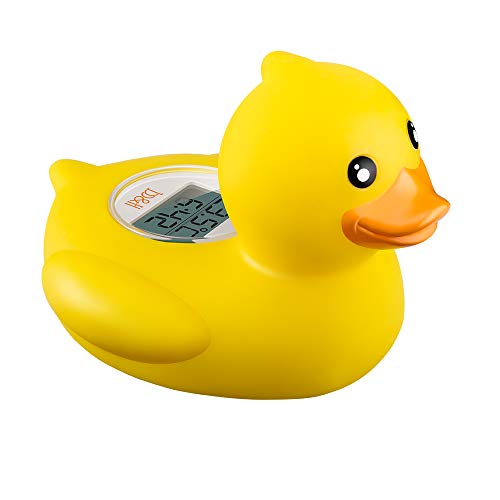
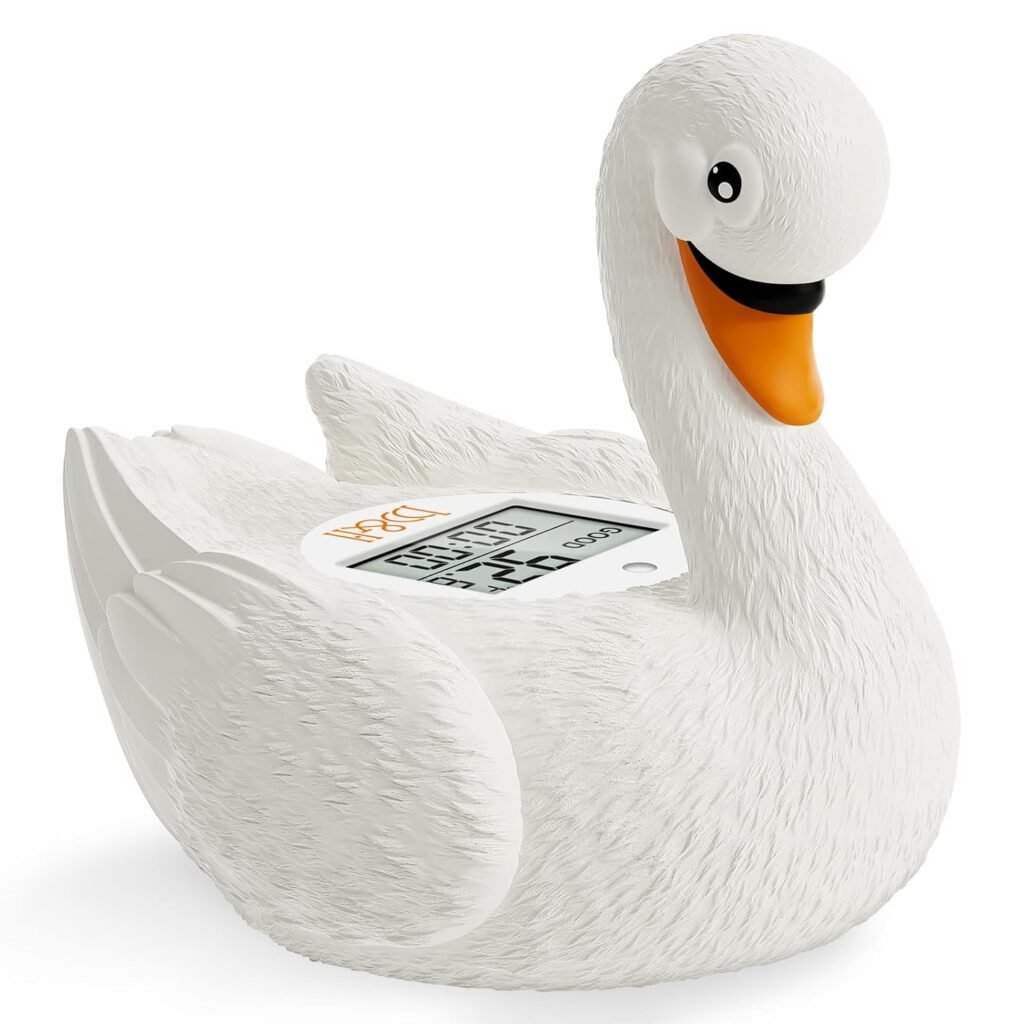
- Measuring water temperature in the bathtub and room. Not only a thermometer, but also a clock. baby thermometer is a new…
- High and low temperature alarm, safe and accurate thermometer flashes and beeps when water is too hot or too cold, no wo…
- The thermometer can display in both Fahrenheit and Celsius.Press “+” and “-“ at the same time to switch between Celsius …
- ABS/PVC environmental protection material and Plexiglas material, BPA free, 2*LR44 batteries included.
- Make a comfortable bath temperature for your baby. Digital thermometer will read bath water temperatures and updates eve…
Common Myths About Baby Bath Temperature
Several misconceptions can lead parents astray when it comes to infant bathing:
Myth 1: Testing water with your elbow or wrist is accurate enough.
Reality: While these methods are better than using your hand (which is accustomed to hotter temperatures), they’re still subjective. A bath thermometer provides more reliable readings.
Myth 2: Babies need very warm baths to stay clean.
Reality: Warmer isn’t better. Water that feels “just warm” to adults may be dangerously hot for babies.
Myth 3: Cold baths toughen up babies.
Reality: Cold baths can actually be harmful, causing temperature drops that stress a baby’s developing system.
Myth 4: You can judge temperature by steam.
Reality: Visible steam typically indicates water is far too hot for a baby’s bath, often exceeding 120°F.
Myth 5: Bath oils make temperature less important.
Reality: No additives change the need for proper water temperature. In fact, some oils can make the water retain heat longer.
Essential Items & Supplies for Baby Bath Temperature
Must-Have Products for Baby Bath Temperature
Creating a safe bath for baby requires several essential tools:
Bath Thermometer: The most important tool for accurate temperature measurement. Digital thermometers provide quick, precise readings, while floating models can be left in the bath to monitor temperature throughout.
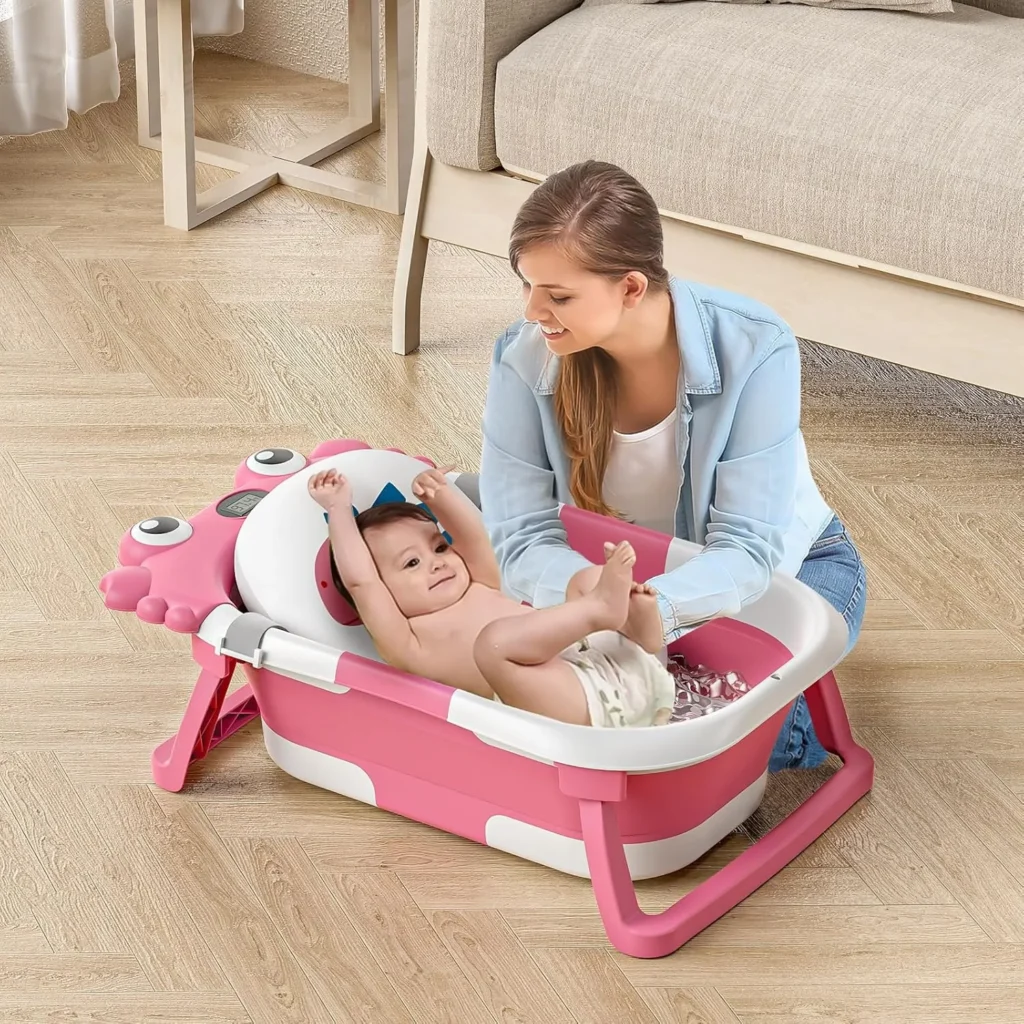
Anti-Scald Devices: These can be installed on your faucets to prevent water from exceeding a safe temperature, providing an additional safety barrier.Infant Bathtub with Temperature Indicator: Many modern baby tubs feature color-changing indicators that show when water is too hot or cold.
Water Temperature Control Valve: This plumbing fixture can be installed to limit the maximum water temperature from your faucet.
Digital Infrared Thermometer: For quick, contactless temperature readings of bath water.
Each of these tools helps create multiple safety checks to ensure the perfect baby bath temperature every time.
Optional but Helpful Items
Beyond the essentials, these items can enhance bath safety and convenience:
Spout Cover with Temperature Sensing: Protects baby from bumps while changing color if water is too hot.
Temperature-Controlled Faucet: Some modern faucets allow precise temperature setting, reducing scalding risk.
Bathroom Thermometer: Helps maintain an appropriate room temperature (75-80°F) for bath time.
Hooded Towels: Help maintain baby’s body heat immediately after bathing.
Bath Temperature Monitoring App: Connected to smart thermometers to alert you to unsafe temperatures.
Temperature-Sensitive Bath Toys: Change color when water temperature exceeds safe levels, making safety checks fun and engaging.
These supplementary items add layers of protection and convenience for vigilant parents.

- DESIGNED FOR BABY BATH : The baby bath thermometer is made of safe materials. We made sure it complies with all the safe…
- FAST & ACCURATE READINGS : This tub thermometer updates the temperature every 3 seconds so you don’t have to wait long t…
- HIGH AND LOW TEMPERATURE SAFETY INDICATOR : When water temperature is higher than theset temperature,indicator light wil…
- NEWBORN BATH ESSENTIAL : Fully waterproof and engineered to float, the bath thermometer is a handy companion at bath tim…
- 2 IN 1 BABY BATH THERMOMETER : Baby thermometer can measure the bath water temperature for baby, also the room temperatu…
Budget-Friendly Alternatives
Creating a safe bathing environment doesn’t have to be expensive:
Traditional Thermometer: An inexpensive option that still provides accurate readings.
DIY Temperature Test: The “elbow test” as a backup (water should feel warm, not hot).
Kitchen Thermometer: If you already own one for cooking, it can double as a bath thermometer.
Plastic Basin or Sink: Instead of purchasing a specialized baby tub.
Regular Digital Thermometer: Many standard thermometers can measure water temperature adequately.
Water Temperature Cards: Inexpensive paper cards that change color based on water temperature.
| Type of Product | Budget Option | Mid-Range Option | Premium Option |
|---|---|---|---|
| Bath Thermometer | Basic floating thermometer ($5-10) | Digital thermometer with alarm ($15-25) | Smart thermometer with app connectivity ($30-50) |
| Anti-Scald Device | Faucet cover ($8-15) | Temperature-limiting valve ($20-30) | Smart water temperature controller ($50+) |
| Baby Bathtub | Plastic basin ($10-15) | Basic baby tub ($20-30) | Temperature-sensing tub with digital display ($40-60) |
| Room Temperature | Standard thermometer ($5-10) | Digital room thermometer ($15-25) | Smart home sensor ($30-50) |
Guide to Baby Bath Temperature
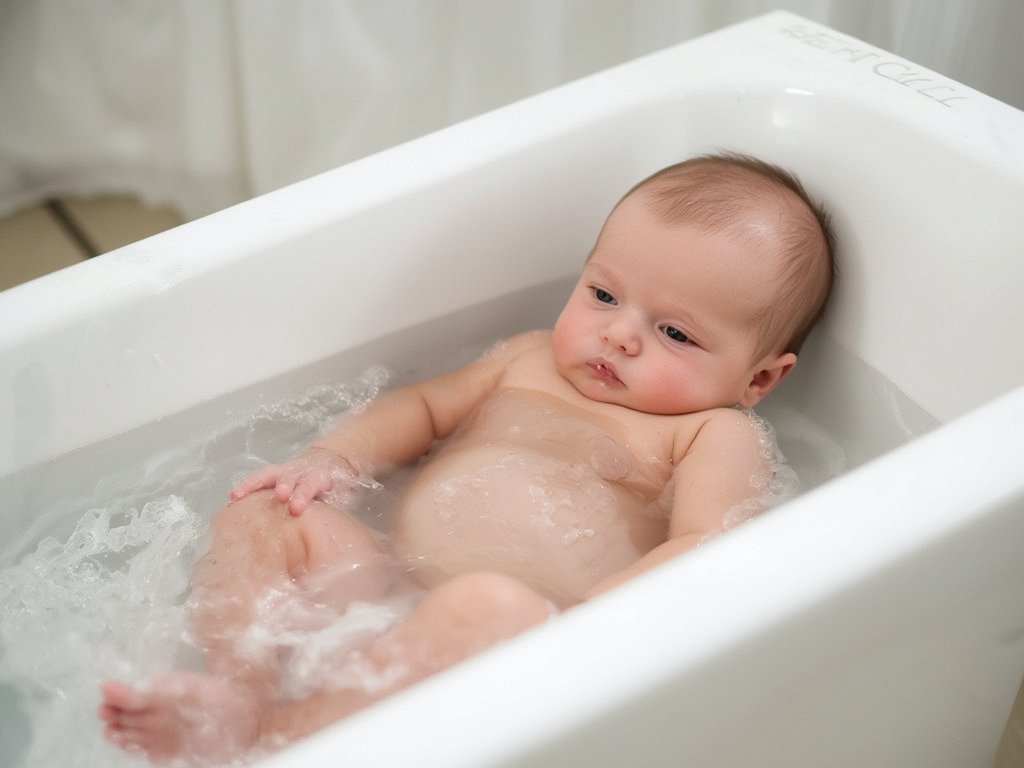
Preparation Steps
Before starting your baby’s bath, follow these preparation steps to ensure a safe experience:
Gather all supplies: Assemble everything you’ll need within arm’s reach before undressing your baby—thermometer, towels, washcloth, baby wash, clean diaper, and clothes.
Check room temperature: Maintain a warm bathroom environment (75-80°F/24-27°C) to prevent your baby from getting chilly before and after the bath.
Fill the tub properly:
- Add cold water first, then hot to avoid creating hot spots
- Fill to 2-3 inches (5-7.5 cm) for newborns and young infants
- For older babies who can sit, 4-5 inches (10-13 cm) is appropriate
Test water temperature: Use a bath thermometer to confirm the water is between 97-100°F (36.1-37.8°C). Double-check by sprinkling water on your inner wrist or elbow—it should feel comfortably warm, not hot.
Secure anti-slip measures: Place a non-slip mat in the tub if not using a specialized baby tub.
Warm the towel: Have a hooded towel warming nearby (over a radiator or heated towel rack) for when bath time ends.
Taking these preparatory steps ensures a safe bath for baby and allows you to keep your full attention on your child during bathing.
Implementation Process
Follow these steps to safely bathe your baby with the proper baby bath temperature:
Double-check the water temperature one final time with your thermometer before placing baby in the bath.
Support your baby properly throughout the bath:
- For newborns and young infants: Support the head and neck with one arm while using your other hand to wash
- For older babies: Use a bath seat or keep one hand on them at all times
Monitor water temperature continuously during longer baths, as it will naturally cool. Add small amounts of warm water as needed, always testing before it reaches your baby.
Keep bath time brief, especially for newborns:
- Newborns (0-1 month): 5 minutes maximum
- Young infants (1-3 months): 5-10 minutes
- Older babies: 10-15 minutes
Use gentle washing techniques from top to bottom, leaving soaping until the end to minimize time with soap on skin.
Rinse thoroughly to remove all soap residue, which can be drying to baby’s skin.
Wrap immediately in a warm towel after bathing to prevent rapid heat loss.
Apply lotion or moisturizer while skin is still slightly damp to lock in moisture.
Troubleshooting Common Issues
Even with perfect preparation, challenges can arise. Here’s how to handle common bath time problems:
Problem: Water cools too quickly
Solution: Keep a small container of warm water nearby to add small amounts as needed. Always test new water before it touches your baby.
Problem: Baby seems uncomfortable or cries during bath
Solution: Check water temperature again—it may be too cool now. Also ensure the room is warm enough and try gentle distraction with bath toys or singing.
Problem: Thermometer and elbow test give different results
Solution: Always trust the thermometer for accuracy. If there’s a significant discrepancy, your thermometer may need replacing.
Problem: Water heater temperature fluctuations
Solution: Install an anti-scald device or adjust your water heater to a maximum of 120°F (49°C) to prevent dangerous surges.
Problem: Bath toys changing water temperature
Solution: Add toys after checking temperature, and recheck if bath time extends beyond 10 minutes.
Remember that maintaining the proper baby bath temperature is a continuous process throughout bath time, not just at the beginning.
Top 5 Benefits of Baby Bath Temperature for Baby & Parents
Developmental & Health Benefits for Baby
Maintaining the correct baby bath temperature offers significant advantages for your little one:
Enhanced Skin Protection: Appropriate water temperature preserves the natural protective barrier of your baby’s skin, helping prevent dryness, irritation, and eczema flare-ups. This preservation of skin integrity is crucial during the first year when skin is developing its defensive capabilities.
Improved Circulation: Properly warmed water encourages healthy blood circulation without the stress of temperature adaptation, supporting overall cardiovascular development in these crucial early months.
Better Sleep Quality: A bath at the ideal temperature (especially in evening routines) signals the body to adjust its core temperature in a way that promotes melatonin production, potentially improving sleep duration and quality.
Reduced Stress Response: Correct water temperature prevents triggering your baby’s stress response, which can occur with water that’s too hot or cold. This creates a more positive bathing experience and may have long-term benefits for stress regulation.
Sensory Development: Temperature-appropriate baths provide important tactile stimulation without overwhelming your baby’s sensitive nervous system, supporting healthy sensory processing development.
Advantages for Parents
Getting the baby bath temperature right benefits caregivers too:
Increased Confidence: Mastering this essential safety skill builds parental confidence and reduces anxiety around bath time.
Stronger Bonding Opportunities: When your baby is comfortable, bath time becomes a positive interaction opportunity rather than a stressful task.
Established Routine: Consistent, pleasant bath experiences help establish predictable routines that make family life more manageable.
Fewer Skin Problems: Proper bathing temperatures reduce the likelihood of developing skin issues that might require medical attention, saving time and worry.
Peace of Mind: Knowing you’re creating a safe bath for baby alleviates the common parental worry about accidental injury.
Long-Term Impact on Family Wellbeing
The benefits of proper bathing practices extend beyond the immediate:
Foundation for Healthy Hygiene Habits: Positive early bathing experiences help children develop lifelong comfort with hygiene routines.
Reduced Healthcare Needs: Maintaining appropriate bath temperatures helps prevent scalds and hypothermia, reducing emergency room visits and associated family stress.
Established Safety Consciousness: Parents who are vigilant about bath temperature often extend this safety awareness to other childcare practices.
Improved Sleep Routines for Everyone: When babies sleep better following properly temperature-regulated baths, parents typically get more rest too, improving overall family functioning.
Long-term Skin Health: Consistent proper bathing temperatures in infancy may contribute to better lifelong skin condition and fewer dermatological issues.
Expert Tips, Alternative Methods & Age-Specific Advice
Tips for Newborns (0-3 Months)
Bathing newborns requires special consideration of their extremely sensitive temperature regulation:
Start with sponge baths until the umbilical cord stump falls off (typically 1-3 weeks), using water at the same recommended baby bath temperature of 97-100°F (36.1-37.8°C).
Keep first baths very brief—2-5 minutes maximum to prevent temperature drop. Even with perfect water temperature, newborns lose heat quickly.
Use the “sandwich technique” for temperature monitoring: check before placing baby in water, during the bath, and before removing them.
Consider timing carefully: Many newborns tolerate bathing best midday when they’re naturally more alert, rather than evening when they may be fussier.
Focus on warmth retention: Pre-warm towels and keep the room extra warm (78-80°F/25.5-26.6°C) to compensate for newborns’ limited ability to regulate their body temperature.Bath frequency recommendation: 2-3 times per week maximum for newborns, as more frequent bathing can dry delicate skin.
Adjustments for Older Babies & Toddlers (3+ Months)
As babies grow, bath time routines evolve:
Slightly lower temperatures become acceptable for older infants—95-100°F (35-37.8°C) is the appropriate range, with the lower end becoming more comfortable as they approach toddlerhood.
Increase bath depth as baby gains sitting ability, but never exceed belly-button height when seated.
Extend bath duration gradually to 10-15 minutes for babies who enjoy the water and maintain good temperature.
Introduce temperature vocabulary with toddlers (“warm,” “cool”) to begin building their understanding of temperature concepts.
Allow more water play while still monitoring temperature, as active play can accelerate cooling of bath water.
Consider bath seats or rings for babies with good head control, but never as a substitute for constant supervision.
Teach temperature testing to curious toddlers as part of water safety education.
Alternative Methods & Different Parenting Styles
Various cultural approaches and parenting philosophies offer alternative perspectives on baby bath temperature and bathing methods:
Co-bathing: Some parents bathe with their infants, which provides natural temperature monitoring (though caution is needed as adult-comfortable temperatures may still be too hot for babies).
Shower bathing: Holding baby while showering requires careful temperature pre-setting to 97-100°F and constant verification as shower temperatures can fluctuate.
Montessori approach: Emphasizes preparing a safe environment with appropriate tools for temperature checking that growing toddlers can begin to participate in using.
Attachment parenting: Often recommends skin-to-skin contact during bathing to help regulate baby’s temperature naturally.
Traditional practices: Some cultures use basin bathing with water mixed to temperature by hand rather than directly from taps, requiring extra vigilance in temperature checking.
Seasonal adjustments: Consider slightly warmer baths in winter (closer to 100°F) and slightly cooler in summer (closer to 97°F) while still staying within the safe range.
Environmental considerations: Water-saving techniques like “top and tail” washing on alternate days can supplement full baths, but temperature checking remains essential for any water contact.
Conclusion
Creating the perfect baby bath temperature is one of the most important safety skills you’ll develop as a parent. At 97-100°F (36.1-37.8°C), you’re providing your little one with the ideal environment that balances comfort and protection for their delicate skin and developing systems. Remember that consistency in checking water temperature before and during bath time creates layers of protection against potential scalding injuries.
The right baby bath temperature transforms bath time from a basic hygiene routine into a multisensory experience that supports your baby’s development while strengthening your bond. By investing in proper tools like a reliable bath thermometer and establishing consistent bathing routines, you’re not just keeping your baby safe—you’re creating positive associations with self-care that can last a lifetime.
As your baby grows, you’ll adapt your approach to bathing while maintaining the same careful attention to water temperature. Remember that your confidence in handling this essential task will naturally increase with practice. Trust your growing parental instincts, use the tools available to you, and enjoy these precious moments of splashing, playing, and connecting with your little one in a safe bath for baby.
Have you found creative ways to make checking baby bath temperature part of your routine? Share your experience in the comments below! And don’t forget to bookmark this guide for future reference as your baby grows and your bathing routine evolves.
FAQs
What is the ideal baby bath temperature and how can I measure it accurately?
The ideal baby bath temperature is between 97-100°F (36.1-37.8°C), which is slightly below body temperature. This range provides comfort without risking burns or chilling your baby. The most accurate measurement comes from using a dedicated bath thermometer, which typically costs between $5-30 depending on features. Digital thermometers provide precise readings, while color-changing varieties offer visual cues when water is too hot or cold.
While many parents rely on testing water with their elbow or wrist, these methods are less reliable because adult skin is less sensitive than a baby’s. If using the elbow method as a backup, the water should feel warm but not hot—if it’s uncomfortable for your skin even briefly, it’s too hot for your baby. Remember that your perception of temperature can vary based on the environmental temperature and your recent activities, making a thermometer the most consistent option for ensuring baby bath temperature safety.
How does water that’s too hot or too cold affect my baby’s health and comfort?
Water temperature outside the ideal baby bath temperature range can pose serious risks. Bath water that’s too hot (above 100°F/37.8°C) can cause scalding burns quickly—water at 120°F can cause third-degree burns in just 5 seconds on a baby’s skin. Even first-degree burns are painful and can lead to infection risks.
Conversely, water that’s too cool (below 95°F/35°C) can cause rapid body temperature drop in infants, who have limited thermoregulation abilities. This can lead to hypothermia, causing shivering, lethargy, and in extreme cases, breathing difficulties. Beyond these physical risks, temperature extremes create stress responses that can make babies associate bath time with discomfort rather than pleasure.
Bath water within the recommended range supports positive physiological responses: it keeps skin hydrated without stripping natural oils, maintains comfortable body temperature, and creates a soothing sensory experience. This comfort translates to better sleep, reduced fussiness, and more positive parent-child interactions during this important daily routine.
How should I adjust bath temperature for newborns versus older babies?
Newborns (0-3 months) have extremely sensitive skin and minimal ability to regulate their body temperature, making proper baby bath temperature critical. For these youngest babies, aim for the upper end of the safe range (99-100°F/37-37.8°C). The environment around the bath should also be warmer (78-80°F/25.5-26.6°C) to prevent rapid cooling when they’re removed from the water.
As babies grow (4-12 months), they develop better temperature regulation abilities, allowing slightly more flexibility. Older infants may tolerate temperatures toward the lower end of the safe range (97-99°F/36.1-37°C), especially during warmer months. By 12+ months, toddlers can generally handle bath temperatures similar to those preferred by young children (95-100°F/35-37.8°C).
The duration of exposure also changes with age: newborns should have very brief baths (5 minutes maximum), while older babies can enjoy longer sessions (10-15 minutes) as they gain enjoyment from water play. Regardless of age, continue using a bath thermometer to verify baby bath temperature rather than relying solely on your perception, which may change as you become accustomed to your baby’s bathing routine.
What bath products and equipment help ensure safe bath temperature for babies?
Several specialized products can help maintain optimal baby bath temperature safety. A reliable bath thermometer is the most essential tool, with options including:
- Digital thermometers with LCD displays showing precise temperature readings
- Floating thermometers that can be left in the bath to monitor continuously
- Color-changing thermometers (often built into bath toys) that provide visual warnings
- Smart thermometers that connect to phone apps for alerts and tracking
Beyond thermometers, anti-scald devices installed on faucets prevent water from exceeding safe temperatures at the source. These devices, costing $15-45, can be especially valuable in homes with older water heaters or variable water temperature. Water heater adjustment is another preventive measure—setting your water heater to a maximum of 120°F (49°C) creates a baseline safety measure.
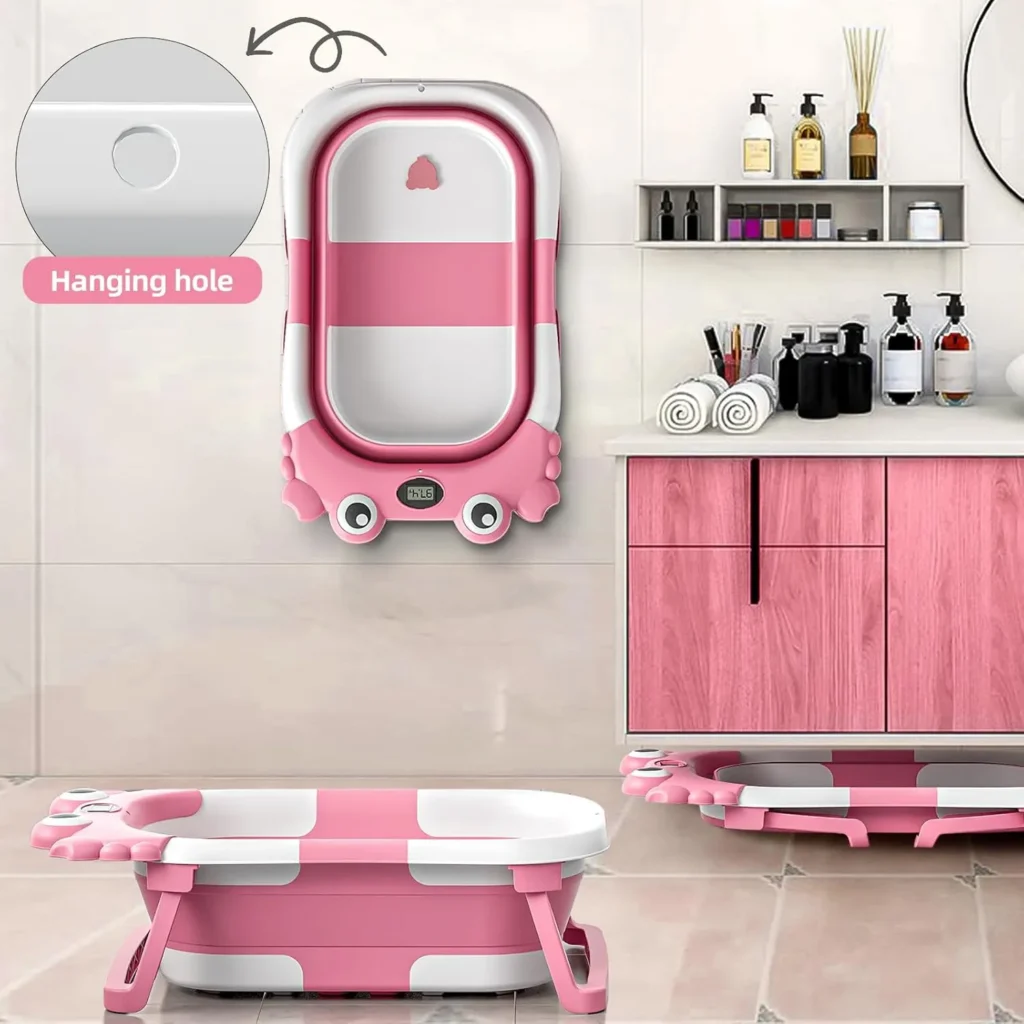
Specialized baby bathtubs with built-in temperature indicators provide another layer of protection. These tubs, ranging from $25-60, often have color-changing drain plugs or integrated thermometers that alert you to unsafe temperatures. For the most comprehensive safe bath for baby setup, combine multiple temperature verification methods rather than relying on any single product.
What are the most common mistakes parents make with baby bath temperature and how can I avoid them?
The most dangerous baby bath temperature mistake is failing to check water temperature altogether, often due to distraction or rushing. Always verify temperature before placing your baby in the bath, even if you’ve developed a routine for filling the tub. Another frequent error is testing water with hands instead of inner wrists or elbows, as hands are less sensitive to heat.
Some parents mistakenly add baby to the bath while still filling it, creating risk from sudden temperature changes or hot water contact. Always fill the bath completely before placing your baby in it, adding cold water first, then hot to prevent hot spots. Neglecting to stir water thoroughly is another oversight—water can have temperature layers, with hotter water at the bottom where it’s poured in.
Environmental factors are often overlooked: cold bathrooms can make bath water feel hotter than it is, leading to too-cool baths. Maintain room temperature between 75-80°F (24-27°C) for accurate perception and baby’s comfort. Finally, many parents forget to monitor temperature throughout longer baths as water naturally cools. Keep warm water nearby to adjust as needed, testing additions before they reach your baby.
Avoid these common mistakes by creating a bath time checklist that includes multiple temperature checks, proper filling technique, environmental preparation, and continuous monitoring to ensure a safe bath for baby from start to finish.