This post may contain Affiliate links. If you buy anything via the link, I will earn a small commission without any effect on your payment. Thank you for your support.
Understanding Baby Sensory Activities – What Every Parent Should Know
Are you looking for ways to boost your little one’s development through play? Introducing baby sensory activities early can make a remarkable difference in your child’s cognitive and physical growth. As a new parent, you might feel overwhelmed by the countless developmental toys and techniques available, but the truth is that engaging your baby’s senses doesn’t have to be complicated or expensive.
In this comprehensive guide, you’ll discover 20 simple yet effective baby sensory activities that support early learning, promote neural connections, and create precious bonding moments. From stimulating visual exercises for newborns to exciting tactile experiences for older babies, we’ll cover activities suitable for every developmental stage.
What Are Baby Sensory Activities?
Baby sensory activities are purposeful experiences designed to stimulate your infant’s senses – touch, sight, sound, smell, and taste – during their critical developmental period. These activities create opportunities for babies to explore, discover, and make sense of the world around them through play-based learning.
Unlike passive entertainment, sensory play encourages active engagement and discovery. Think of activities like exploring different textures, listening to varied sounds, tracking colorful objects, or experiencing gentle scents. Each sensory input helps form new neural pathways in your baby’s rapidly developing brain.
These activities range from structured play sessions using specialized materials to simple everyday moments that engage multiple senses simultaneously – like splashing during bath time or feeling the texture of different foods during mealtime.
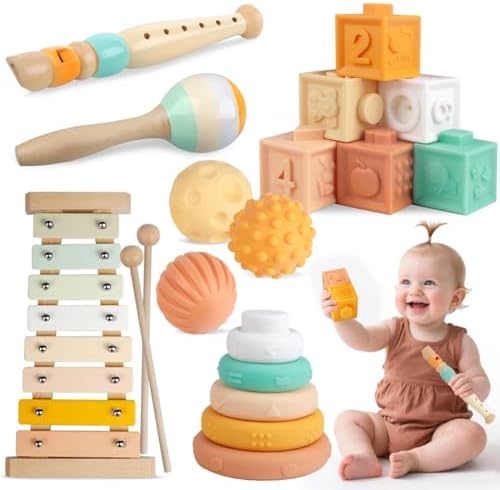
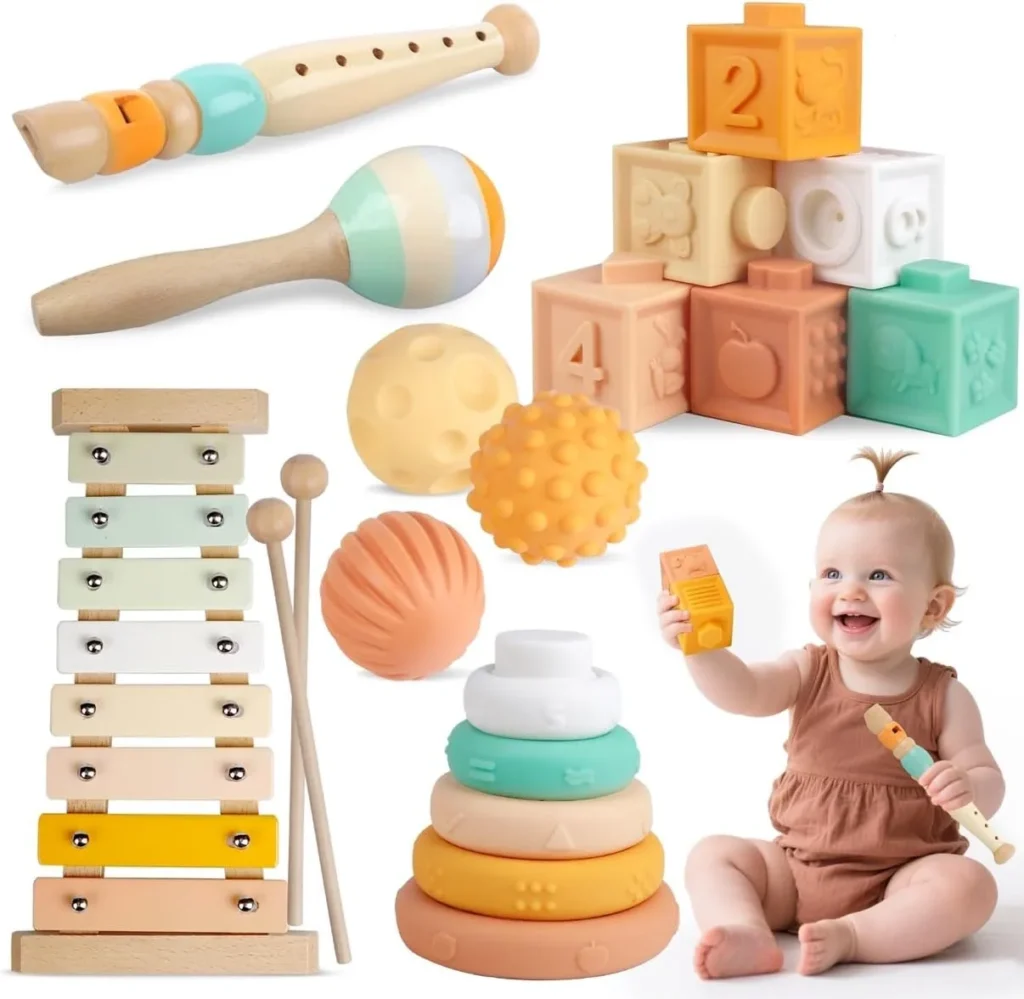
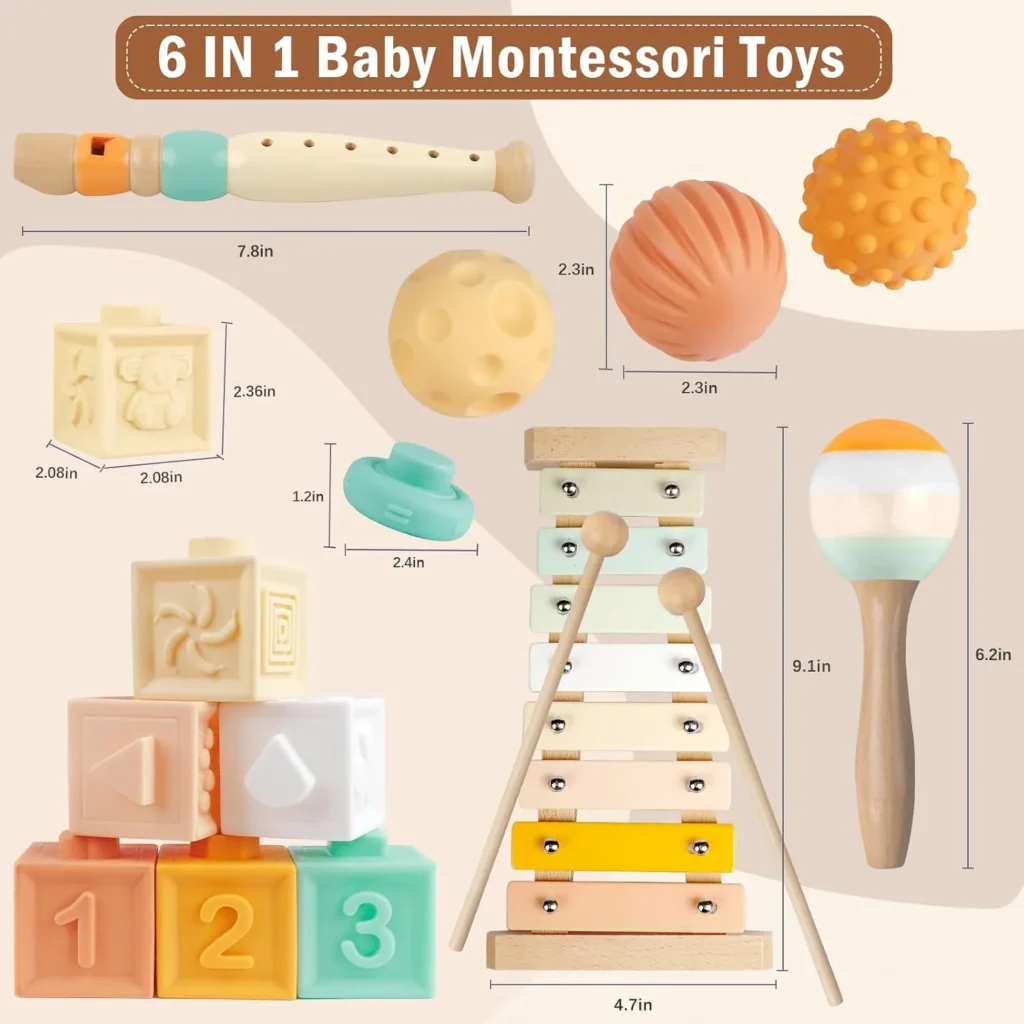
- 6-in-1 Baby Toy Set: This comprehensive toy set is designed to grow with your child, suitable for infants and toddlers. …
- Montessori-Inspired Sensory Learning: This toy set promotes hands-on exploration and sensory development following Monte…
- Thoughtful Gift Option for Babies and Toddlers: This 6-in-1 toy set combines stacking fun with musical play, making it a…
- Safe Materials – BPA-Free and Non-Toxic: Made from 100% BPA-free silicone and natural, non-toxic wood, these infant toys…
- Educational Toys for Early Development: The baby stacking toys help improve hand-eye coordination and problem-solving sk…
Why Baby Sensory Activities Matter for Your Baby’s Development
Baby sensory activities play a crucial role in early brain development for several compelling reasons:
- Neural Connection Building: During the first three years, your baby’s brain forms over one million neural connections every second. Sensory stimulation directly influences this process.
- Language Development: Exposure to various sensory experiences provides vocabulary foundations before babies can speak.
- Motor Skills Enhancement: Activities that encourage reaching, grasping, and exploring help develop both fine and gross motor coordination.
- Cognitive Growth: Problem-solving skills emerge as babies learn cause and effect through sensory play.
- Social-Emotional Development: Shared sensory experiences strengthen the parent-child bond and build emotional security.
Research consistently shows that babies who engage in regular sensory stimulation show advanced cognitive development and better learning outcomes in later childhood.
Common Myths About Baby Sensory Activities
Myth #1: You need expensive specialized toys.
Truth: Everyday household items often make the best sensory tools. A crinkly paper bag, wooden spoons, or textured fabrics can be more engaging than costly toys.
Myth #2: More stimulation is always better.
Truth: Babies can easily become overwhelmed by excessive stimulation. Quality, age-appropriate activities with plenty of downtime are more beneficial than constant sensory input.
Myth #3: Sensory activities are just for special needs children.
Truth: While baby sensory activities are especially beneficial for children with sensory processing challenges, they’re essential for all babies’ optimal development.
Myth #4: Babies need electronic toys with lights and sounds.
Truth: Simple, open-ended materials that allow exploration often provide richer sensory experiences than electronic toys with predetermined outcomes.

- Musical Toys for Newborns – This baby toys carefully designed for newborn babies after extensive research. The caterpill…
- Learning Sensory Toys – The body part of the caterpillar infant toys have 3 different sensory designs – crinkle, rattle …
- Safe&Soft Plush-This stuffed animals newborn toys are made of high quality plush fabric and filled with elastic PP cotto…
- Ideal Baby Gifts – This musical baby toys 6-12 months can be used as a Montessori toys to stimulate baby’s intelligence …
- Record Your Baby’s Growth – The innovative scale design on the plush toy is convenient for parents to measure baby’s hei…
Essential Items & Supplies for Baby Sensory Activities
Must-Have Products for Baby Sensory Activities
Building your sensory play collection doesn’t require a huge investment. Here are the essentials that provide maximum developmental benefits:
- Contrasting Black and White Cards: Newborns can best perceive high-contrast images, making these cards perfect for visual development.
- Textured Balls: Various textures, sizes, and weights help develop tactile discrimination and grasping skills.
- Sensory Bottles: Homemade or purchased, these sealed containers with objects inside encourage visual tracking and cause-effect understanding.
- Musical Instruments: Simple shakers, drums, or bells introduce auditory discrimination.
- Fabric Swatches: Collection of different textures (silk, cotton, burlap, velvet, etc.) for tactile exploration.
- Unbreakable Mirror: Babies are fascinated by faces, especially their own, making mirrors excellent for self-recognition development.
- Silicone Teethers: These provide oral sensory input and relief during teething.
Optional but Helpful Items
These supplementary items can enhance your baby sensory activities repertoire:
- Light Projector: Creates fascinating visual displays on walls and ceilings.
- Baby-Safe Paint: For mess-free artistic exploration in ziplock bags or for supervised finger painting.
- Play Silks: Lightweight, colorful fabrics for peek-a-boo, gentle touch, or waving in the air.
- Sensory Mats/Tiles: Various textures and surfaces for tummy time or crawling exploration.
- Water Play Table: For supervised splashing and pouring activities (for older babies).
- Play Dough or Edible Dough: For squishing and molding (once baby no longer mouths everything).
- Rainbow Ribbon Ring: Colorful streamers attached to a ring for visual tracking and grasping.
Budget-Friendly Alternatives
Creating enriching sensory experiences doesn’t require expensive specialty products. Consider these cost-effective alternatives:
| Commercial Product | Budget-Friendly Alternative |
|---|---|
| Sensory balls ($15-30) | Clean socks filled with different materials (rice, beans, etc.) |
| Light projector ($25-40) | Flashlight with colored cellophane |
| Musical instruments ($20+) | Homemade shakers using sealed containers with rice/beans |
| Sensory bottles ($10-15 each) | Plastic water bottles filled with water, food coloring, and small objects |
| Texture books ($15+) | DIY fabric swatches attached to cardboard pages |
| Water table ($40+) | Shallow plastic storage container with a small amount of water |
| Baby gym ($60+) | Hanging toys from a clothes-drying rack |
Guide to Baby Sensory Activities
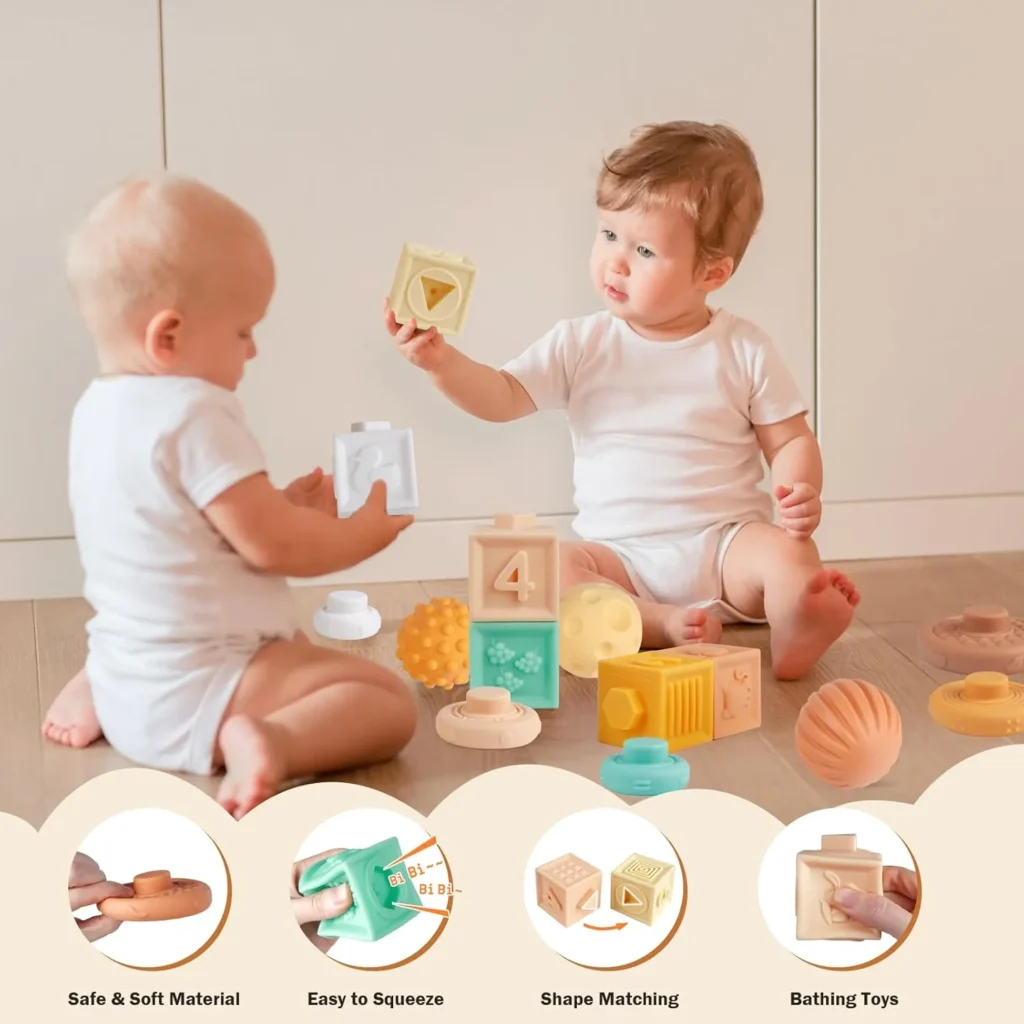
Preparation Steps
Before introducing baby sensory activities, follow these important preparation steps:
Consider your baby’s developmental stage: Choose activities appropriate for your baby’s age and abilities. Newborns need simpler, less stimulating activities than older babies.
Observe your baby’s temperament: Some babies enjoy active, stimulating play while others prefer calmer experiences. Follow your baby’s cues.
Create a safe environment:
- Remove choking hazards and unsafe objects
- Ensure all materials are non-toxic and baby-safe
- Set up in a comfortable, well-lit space
- Have cleaning supplies readily available for messy activities
Time it right: Choose moments when your baby is alert, well-fed, and rested—not when they’re hungry, tired, or overstimulated.
Set realistic expectations: Keep initial sessions brief (5-10 minutes) and extend as your baby shows interest and engagement.

- 👶🏻🥰【Tactile and Multi Textured Sensory Massage Ball】These sensory toys have different textures and can be used for tacti…
- 👶🏻🥰【Bright Multicolor Infant Toys】Bright colors and interesting texture make the baby like it, and make this funny ball …
- 👶🏻🥰【Meet Safety Standard and Easy to Clean】The materials used are BPA FREE non-toxic and harmless, and have passed the s…
- 👶🏻🥰【Multiple Play Methods & Attracting Baby’s Attention】When children Hand Catching, throw, kick, chase crawling or hold…
- 👶🏻🥰【EXCELLENT STRESS RELIEVER Hand Grip Balls】These Stress-relief Balls can increase focus and attention for kids with a…
- 🐰🌼【Soft Balls & Baby Easter Basket Stuffers】 – This Sensory Toy features soft material and shapes designed for baby hand…
Implementation Process
Here are 20 developmentally appropriate baby sensory activities organized by age:
For Newborns (0-3 months):
High-Contrast Cards: Place black and white patterns about 8-12 inches from baby’s face to promote visual focus.
Gentle Massage: Using baby-safe oil, give a gentle massage while naming body parts to combine touch with language development.
Sound Exploration: Introduce different sounds—shaking a rattle, singing softly, or playing gentle music—from various directions to encourage auditory tracking.
Mirror Play: Hold baby in front of an unbreakable mirror during tummy time to encourage visual engagement.
Texture Stroking: Gently stroke different textures (silk scarf, cotton ball, velvet) across baby’s arms, legs, and tummy, describing each sensation.
For Young Babies (3-6 months):
Sensory Bottles: Create sealed bottles filled with colored water, glitter, or small objects for baby to observe and eventually manipulate.
Fabric Box: Fill a container with different textured fabrics for baby to touch and explore.
Musical Instruments: Introduce simple instruments like maracas or bells, demonstrating how they work before offering them to baby.
Crinkly Materials: Offer food packaging, tissue paper, or specially designed crinkly toys for auditory-tactile stimulation.
Simple Water Play: During bath time, demonstrate how cups can fill and pour, introducing concepts of cause and effect.
For Older Babies (6-12 months):
Edible Finger Paint: Use yogurt tinted with food coloring for safe artistic exploration.
Treasure Baskets: Create collections of household objects with different properties (wooden spoons, silicone spatulas, metal measuring spoons) for tactile discrimination.
Sensory Bags: Fill ziplock bags with hair gel and small, sealed objects for mess-free squishing and visual tracking.
Drum Circle: Offer various containers to tap, bang, and explore different sounds.
Textured Pathway: Create a crawling path with different textures (bubble wrap, fabric squares, foam pieces) for babies who are mobile.
For Approaching Toddlers (12+ months):
Rice/Bean Bin: Fill a shallow container with rice or beans and provide cups and spoons for pouring and scooping.
Scented Play Dough: Make homemade play dough with different scents (vanilla, cinnamon, lemon) for multi-sensory play.
Nature Sensory Bin: Collect nature items (large pinecones, smooth stones, leaves) for supervised exploration.
Light Table Play: Use a DIY light table (flashlight under a clear plastic container) with colored transparent objects.
Sound Matching: Create pairs of identical sound shakers (using containers filled with rice, beans, bells) for auditory discrimination.
Troubleshooting Common Issues
Baby Shows Little Interest:
- Try a different time of day when baby is more alert
- Start with brief, simple activities and build gradually
- Follow baby’s natural interests rather than forcing activities
Overstimulation Signs:
- Watch for turning away, arching back, crying, or becoming fussy
- Immediately reduce stimulation and provide calming comfort
- Next time, try simpler activities with fewer sensory inputs
Safety Concerns:
- Always supervise sensory play activities
- Ensure all materials are age-appropriate and free from choking hazards
- Regularly inspect toys and materials for damage or wear
Messy Play Hesitation:
- Start with contained sensory experiences (sealed bags)
- Gradually introduce messier activities with clear boundaries
- Prepare the environment with splash mats and have cleanup supplies ready
Top 5 Benefits of Baby Sensory Activities for Baby & Parents
Developmental & Health Benefits for Baby
Brain Development: Baby sensory activities directly stimulate neural connections during the critical period of brain development. When babies experience new sensations, they create and strengthen pathways that form the foundation for future learning. Studies show that rich sensory experiences in early life correlate with improved cognitive outcomes later.
Language Acquisition: Sensory play provides concrete experiences that build vocabulary foundations. When you name objects, describe textures, or verbalize actions during play, you’re creating valuable language connections. Research indicates that babies exposed to varied sensory experiences alongside descriptive language develop larger vocabularies by age two.
Motor Skill Development: Both fine and gross motor skills advance through sensory exploration. Grasping different textures, manipulating objects, and navigating sensory paths all strengthen the mind-body connection. These activities develop hand-eye coordination, balance, and spatial awareness fundamental to physical development.
Self-Regulation Skills: Through sensory play, babies learn to process and respond to different stimuli, gradually developing the ability to self-regulate. Activities like exploring different textures or listening to varied sounds help babies understand their sensory thresholds and develop coping mechanisms for sensory input.
Cognitive Foundation Building: Problem-solving, critical thinking, and cause-effect understanding all emerge through sensory exploration. When babies discover that squeezing a toy produces a sound or that water flows through a sieve, they’re building cognitive frameworks that support later academic learning.
Advantages for Parents
Enhanced Bonding Opportunities: Baby sensory activities create meaningful moments of connection. The shared joy of discovery strengthens the parent-child relationship in unique ways beyond routine care.
Better Understanding of Your Baby: Through observing your baby’s responses to different sensory experiences, you’ll gain insights into their preferences, temperament, and developmental progress. These observations help you better respond to their needs and interests.
Confidence in Supporting Development: Implementing sensory activities gives parents tangible ways to support their baby’s growth, providing reassurance that they’re actively contributing to optimal development.
Stress Reduction: Focused play sessions can be mindful moments for parents too, offering a break from the mental load of caregiving and creating opportunities for genuine presence and joy.
Long-Term Impact on Family Wellbeing
Establishment of Learning Through Play: Families who embrace baby sensory activities often continue prioritizing experiential learning throughout childhood, creating a home culture that values curiosity and discovery.
Communication Patterns: The descriptive language and responsiveness practiced during sensory play often translate to improved family communication patterns that persist as children grow.
Adaptability and Resilience: Families who regularly engage in varied sensory experiences tend to develop greater flexibility and adaptability to different situations and environments.
Joy in Simple Pleasures: Perhaps most importantly, families who explore the sensory world together often find continued delight in simple experiences, fostering gratitude and mindfulness that enhances overall wellbeing.
Expert Tips, Alternative Methods & Age-Specific Advice
Tips for Newborns (0-3 Months)
For newborns, baby sensory activities should be gentle, brief, and primarily focused on visual and auditory stimulation:
Optimize visual experiences: Position high-contrast cards 8-12 inches from baby’s face—the optimal distance for newborn focus.
Use your face as a tool: Your face is the perfect sensory toy for newborns. Vary your expressions, make different sounds, and slowly move from side to side to encourage visual tracking.
Introduce gentle sounds: Soft singing, humming, or talking provides valuable auditory stimulation. Vary your pitch and volume slightly to maintain interest.
Incorporate sensory experiences into routine care: Use diaper changes and bath time for brief sensory moments rather than creating separate “activity sessions.”
Watch for overstimulation cues: Hiccups, sneezing, looking away, or fussing indicate your newborn needs a break from stimulation.
Adjustments for Older Babies & Toddlers (3+ Months)
As babies grow, their sensory needs and capabilities evolve dramatically:
3-6 Months:
- Introduce more tactile experiences as babies gain hand control
- Position toys within reaching distance to encourage grasping
- Incorporate tummy time sensory play to build core strength
- Introduce more varied sounds and simple cause-effect toys
6-9 Months:
- Offer opportunities for banging, dropping, and transferring objects
- Introduce simple sensory play with food during mealtimes
- Create simple obstacle courses for crawling babies
- Begin introducing “containers and contents” play (filling and emptying)
9-12 Months:
- Expand messy play opportunities as babies develop pincer grasp
- Create sensory bins with themed materials
- Introduce simple imitative play with sensory elements
- Provide opportunities for standing sensory play as mobility increases
12+ Months:
- Introduce sensory activities that encourage language development
- Create more complex sensory bins with tools for scooping and pouring
- Begin simple sensory art experiences
- Incorporate gross motor challenges into sensory play
Alternative Methods & Different Parenting Styles
Baby sensory activities can align with various parenting philosophies:
Montessori Approach:
- Focus on real-world materials rather than plastic toys
- Create a prepared environment with accessible sensory materials
- Emphasize natural consequences and exploration without interruption
- Use simple, beautiful materials like wooden objects and natural fabrics
RIE (Resources for Infant Educarers) Method:
- Allow babies to discover sensory experiences at their own pace
- Narrate experiences rather than directing play
- Provide uninterrupted time for sensory exploration
- Focus on fewer, high-quality sensory experiences rather than overstimulation
Waldorf Philosophy:
- Emphasize natural materials like wool, cotton, and wood
- Incorporate rhythmic movement and music into sensory experiences
- Focus on open-ended materials that inspire imagination
- Limit electronic or synthetic sensory inputs
Conclusion
Incorporating baby sensory activities into your daily routine isn’t just a way to entertain your little one—it’s an investment in their cognitive, physical, and emotional development. The 20 activities we’ve explored provide a comprehensive foundation for supporting your baby’s sensory journey from birth through the first year and beyond.
Remember these key takeaways:
Simple everyday materials often make the best sensory tools—no need for expensive specialty products.
Follow your baby’s cues and interests, adapting activities to match their developmental stage and temperament.
Brief, frequent sensory experiences are more beneficial than occasional lengthy sessions.
Incorporate descriptive language during baby sensory activities to maximize language development benefits.
The parent-child connection formed during shared sensory exploration may be the most valuable benefit of all.
As your baby grows, you’ll discover which sensory experiences bring them the most joy and engagement. Trust your instincts, celebrate the messy moments, and enjoy witnessing your baby’s unique journey of sensory discovery.
Have you tried any of these baby sensory activities with your little one? Share your experience in the comments below! And for more developmental play ideas, explore our related article on baby care tips for proven advice tailored to new parents.
FAQs
When should I start introducing baby sensory activities to my newborn?
You can begin gentle baby sensory activities from the very first days of life. Newborns are particularly responsive to high-contrast visual patterns, familiar voices, and gentle touch. Start with simple activities like positioning high-contrast black and white cards within your baby’s field of vision (8-12 inches away), gently talking or singing while making eye contact, or providing supervised tummy time on different textured surfaces.
Keep sessions very brief—just 1-2 minutes initially—and watch carefully for signs that your baby is enjoying the experience or becoming overstimulated. Remember that everyday caregiving routines like diaper changes and bathing already provide valuable sensory input for newborns, so there’s no need to create elaborate “sensory sessions.” As your baby grows and shows more alert periods, you can gradually introduce more varied and longer baby sensory activities that match their developmental capabilities.
How can I tell if my baby is benefiting from sensory activities?
You’ll know your baby is benefiting from baby sensory activities when you observe positive engagement signs such as focused attention, smiling, cooing, reaching toward objects, or attempting to repeat actions that produced interesting results. Look for developmental progress like improved tracking of moving objects, increased hand-eye coordination, better head control during tummy time, or new attempts to grasp and manipulate objects.
Another important indicator is your baby’s emotional response—sensory play should generally produce joy and curiosity, not frustration or distress. Over time, you might notice your baby showing preferences for certain textures, sounds, or visual experiences, which indicates they’re developing sensory discrimination skills.
Remember that benefits aren’t always immediately obvious—many baby sensory activities support long-term neural development even when immediate reactions seem subtle. If your baby consistently shows disinterest or distress during particular sensory experiences, it’s perfectly fine to try different activities or revisit them when they’re developmentally ready.
Are there any safety concerns I should be aware of with baby sensory activities?
Safety should always be your primary concern when conducting baby sensory activities. First, ensure all materials are age-appropriate and free from choking hazards—anything smaller than a toilet paper tube should be avoided for babies under 18 months. Always use non-toxic, food-grade materials for sensory bins or art activities, as babies explore largely through mouthing objects.
For sensory bottles or bags, verify they’re completely sealed and regularly check for wear and leakage. During water-based baby sensory activities, never leave your baby unattended, even with shallow water. For messy play with foods or edible materials, be mindful of potential allergens and introduce new substances one at a time.
Temperature safety is also important—test bath water or heated/cooled sensory materials before exposing your baby’s sensitive skin. Finally, constant supervision is essential during all sensory play, especially with older babies who can move quickly and potentially access unsafe materials. Remember that safety precautions should evolve as your baby becomes more mobile and adept at manipulating objects.
How long should sensory play sessions last for babies of different ages?
The ideal duration for baby sensory activities varies significantly by age and individual temperament. For newborns (0-2 months), keep sessions extremely brief—just 1-3 minutes of focused sensory input is plenty, and should only occur during naturally alert states. For young babies (2-4 months), sessions might extend to 5 minutes if your baby remains engaged and happy.
As babies reach 4-6 months, their attention spans naturally increase, potentially allowing for 5-10 minute baby sensory activities during alert periods. By 6-9 months, many babies can enjoy 10-15 minute sensory experiences, particularly with varied elements that maintain interest. Older babies (9-12 months) might engage in sensory play for 15-20 minutes when the activity matches their interests and abilities.
However, these are just guidelines—always let your baby’s cues be the ultimate guide. Signs that it’s time to end a session include looking away, becoming fussy, rubbing eyes, or showing other fatigue signals. Multiple brief sessions throughout the day are generally more beneficial than one long session. Remember that quality of engagement matters far more than duration, and frequent, joyful short experiences contribute significantly to development.
Can sensory activities help babies with developmental delays or special needs?
Baby sensory activities can be particularly beneficial for infants with developmental delays or special needs, often serving as a form of early intervention when thoughtfully adapted. For babies with sensory processing differences, carefully calibrated sensory experiences can help normalize responses to everyday stimuli and build tolerance for challenging sensory inputs. Children with motor delays may use sensory motivation to encourage reaching, grasping, or movement they might otherwise resist during therapeutic exercises.
Communication delays can be addressed through sensory play that encourages joint attention, turn-taking, and provides natural opportunities for language modeling. For babies with visual or hearing impairments, baby sensory activities can be modified to emphasize their stronger senses while still providing gentle exposure to developing ones.
If your child has diagnosed special needs, consider consulting with their therapists (occupational, physical, or speech) to develop customized sensory activities that complement therapeutic goals. Many early intervention programs incorporate sensory play techniques that parents can continue at home. Remember that babies with special needs may need more time to process sensory information, so patience and close attention to subtle feedback cues becomes even more important during these valuable play experiences.