
This post may contain Affiliate links. If you buy anything via the link, I will earn a small commission without any effect on your payment. Thank you for your support.
Introduction
That first moment when you hear your baby’s heartbeat is nothing short of magical—a rapid, rhythmic sound confirming the precious life growing inside. For many expectant parents, baby heartbeat monitoring becomes a source of reassurance and connection during pregnancy. According to a recent survey, 68% of expectant mothers report reduced anxiety when they can periodically check their baby’s heartbeat at home.
This comprehensive guide will walk you through everything you need to know about monitoring your baby’s heartbeat safely at home—from understanding the technology and safety considerations to recognizing when professional medical attention is necessary. Whether you’re considering purchasing a fetal doppler or already own one, you’ll learn how to use it responsibly while navigating the emotional journey of pregnancy.
Let’s explore how to make the most of this technology while keeping both mom and baby’s wellbeing the top priority.
Understanding Baby Heartbeat Monitoring – What Every Parent Should Know

What is Baby Heartbeat Monitoring?
Baby heartbeat monitoring refers to the process of listening to and tracking a fetal heartbeat during pregnancy. This can be done through several methods, from clinical tools used by healthcare providers to at-home devices designed for expectant parents. The most common clinical methods include:
- Fetoscope: A specialized stethoscope that can detect fetal heart sounds after about 18-20 weeks
- Doppler ultrasound: Uses sound waves to detect movement and can find heartbeats as early as 8-12 weeks
- Electronic fetal monitoring: Used primarily during labor to continuously track baby’s heart rate
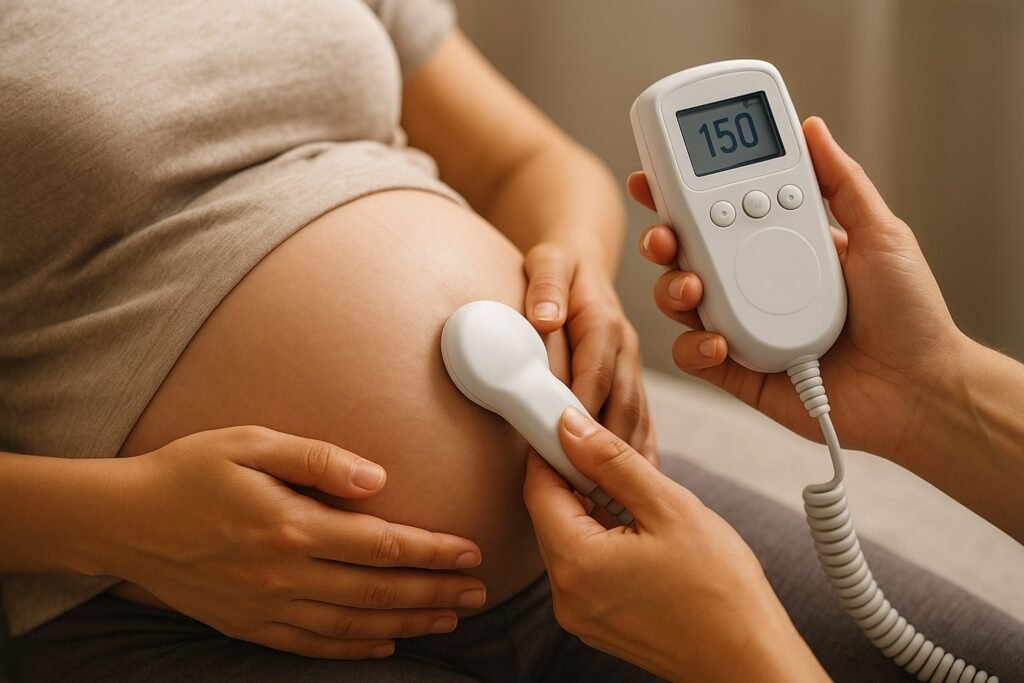
For home use, handheld Doppler devices have become increasingly popular, allowing parents to listen to their baby’s heartbeat between doctor’s appointments. These devices work by sending and receiving sound waves that bounce off the baby’s heart, converting the movement into audible sounds.

Nylon and Spandex
Imported
FDA-Cleared Wearable Baby Monitor: Dream Sock is the first FDA-cleared smart baby monitor providing real-time pulse rate and oxygen readings for healthy infants 1–18 months (6–30 lbs).
Live Pulse & Oxygen Tracking: Works as a baby heartbeat and oxygen monitor, showing live pulse rate, oxygen levels, wakings, and sleep trends in the Owlet Dream App.
Real-Time Health Alerts: Get instant alerts through the Base Station and the app if your baby’s pulse rate or oxygen levels fall outside preset zones, helping you know exactly when you’re needed.
Sleep Data & Expert Tips: View historical pulse rate, oxygen, and sleep trends—plus helpful sleep tips from Owlet experts, with an option to upgrade to Owlet360 for deeper, advanced insights.
WiFi + Bluetooth Compatible: Uses WiFi and Bluetooth for reliable monitoring and continues sending alerts with Bluetooth and backup battery power during internet or power outages.
U.S. Version + Easy Setup: Compatible only in the United States. For setup, connect your Dream Sock and phone/tablet to 2.4 GHz WiFi; after setup, you can return your device to 5 GHz.
Why Baby Heartbeat Monitoring Matters for Your Baby’s Development
Tracking your baby’s heartbeat provides valuable insights into their development and wellbeing. A healthy fetal heart typically beats between 110-160 beats per minute, though this can vary based on gestational age and activity level.
Regular monitoring by healthcare professionals helps:
- Confirm pregnancy viability in early stages
- Track baby’s response to stimuli and movements
- Identify potential issues requiring further investigation
- Monitor baby’s status during labor and delivery
For parents, home baby heartbeat monitoring can offer emotional benefits, including:
- Creating bonding opportunities with baby before birth
- Reducing anxiety between prenatal appointments
- Involving partners and siblings in the pregnancy experience
- Providing reassurance during normal pregnancy fluctuations
However, it’s crucial to understand that home monitoring should complement, not replace, professional prenatal care.
Common Myths About Baby Heartbeat Monitoring
Despite their popularity, several misconceptions surround at-home fetal dopplers:
Myth 1: Home dopplers can diagnose problems.
Reality: While dopplers can detect heartbeats, they cannot diagnose medical conditions or replace professional evaluation.
Myth 2: Not finding a heartbeat means something is wrong.
Reality: Many factors affect heartbeat detection, including position, gestational age, and user experience. Failing to find a heartbeat doesn’t necessarily indicate problems.
Myth 3: More frequent monitoring is always better.
Reality: Excessive monitoring may cause unnecessary anxiety. Most healthcare providers recommend limited home use.
Myth 4: All fetal dopplers provide the same results.
Reality: Quality varies significantly between models, with medical-grade devices offering greater reliability than many consumer versions.
Myth 5: Fetal dopplers are completely risk-free.
Reality: While generally considered safe when used as directed, the fetal doppler safety guide emphasizes moderation to minimize ultrasound exposure.
Essential Items & Supplies for Baby Heartbeat Monitoring
Must-Have Products for Baby Heartbeat Monitoring
If you’re considering home monitoring, these essential items will ensure a safe and effective experience:
Quality Fetal Doppler Device – Look for FDA-registered models with positive reviews. Higher-quality devices typically provide clearer sound and more accurate readings. The fetal doppler safety guide recommends models with:
- 3MHz frequency (optimal for fetal detection)
- Digital display
- Built-in speaker
- Recording capability
Ultrasound Gel – This conductive medium is crucial for proper sound wave transmission. Medical-grade gel works best, though aloe vera gel can serve as a natural alternative in a pinch.
Batteries or Charging Equipment – Keep spares on hand to avoid disappointment during monitoring sessions.
Notebook or App – Document readings, including:
- Date and time
- Heart rate
- Duration of monitoring
- Baby’s movement or response
- Your observations
Comfortable Seating – Create a relaxed environment with proper back support for monitoring sessions.

- SAFER SLEEP WITH SMARTER TECH: Advanced AI detects covered faces and rollovers, alerting parents instantly. Plus, track your baby’s growth and height automatically—no extra accessories needed!
- MONITOR BABY DAY & NIGHT: Enjoy ultra-sharp 2.5K QHD video and crystal-clear night vision to see your baby in all conditions. The built-in night light lets parents check on baby without disruption.
- IMPROVE BABY’S SLEEP QUALITY: Get detailed sleep reports on duration, wake times, and caregiver interactions. Automatically play scheduled lullabies and white noise when baby is detected in the crib.
- KNOW BABY IS ALWAYS DOING WELL: Track your baby’s growth and daily activities, review sleep patterns with key moment tagging using the 72-hour video playback, and share special moments with up to 8 family members on the Moments Wall.
- YOUR DATA SECURED, PSTI CERTIFIED: Connects to your secure home Wi-Fi network (WPA/WPA2) for stable streaming. We recommend a modern router with at least 5 Mbps for optimal performance.
- WHAT’S INCLUDED: CuboAi Monitor 3, floor stand and mobile stand. 1-Year Warranty and in-app customer support service in multiple languages.
Optional but Helpful Items
These supplementary items enhance the baby heartbeat monitoring experience:
Heartbeat Recording Device – Some dopplers allow you to record and share heartbeat sounds with family members or create keepsakes.
Smartphone Adapters – Certain models connect to phones for recording, sharing, or analyzing heartbeat patterns.
Split Headphone Adapter – Allows partners to listen simultaneously, creating shared bonding experiences.
Protective Case – Safeguards your investment and keeps all accessories organized.
Positioning Pillows – Helps achieve optimal comfort during longer monitoring sessions, especially as pregnancy progresses.
Budget-Friendly Alternatives
If cost is a concern, consider these more affordable options:
| Alternative Approach | Approximate Cost | Benefits | Limitations |
|---|---|---|---|
| Rental Doppler Programs | $20-40/month | Professional-grade equipment; Lower upfront cost | Ongoing expense; Deposit requirements |
| Smartphone Apps | $0-10 | Convenient; No additional equipment | Less accurate; Cannot detect actual heartbeat, just amplify sounds |
| Fetoscope | $25-60 | No batteries/electricity needed; Simple design | Only works after 18+ weeks; Requires practice to use effectively |
| Shared Community Resources | Varies | Cost-effective; Community support | Hygiene concerns; Limited availability |
| Focusing on Kick Counts | Free | Evidence-based monitoring method; No equipment needed | Not available until later pregnancy; Different type of monitoring |
Remember that while budget options exist, the reliability and safety of monitoring increase with quality equipment. When in doubt, consult the fetal doppler safety guide for recommendations.
Guide to Baby Heartbeat Monitoring

Preparation Steps
Before beginning any baby heartbeat monitoring session at home, proper preparation ensures the best experience:
Choose the Right Time:
- Wait until at least 12 weeks gestation (earlier attempts may be unsuccessful)
- Select a quiet time when you’re relaxed and unhurried
- Try when your bladder is full, as this can push the uterus up for better access
Gather All Supplies:
- Doppler device with fresh batteries
- Ultrasound gel at room temperature
- Tissues for cleanup
- Watch or timer
- Recording device (if desired)
Create a Comfortable Environment:
- Lie down in a semi-reclined position
- Place pillows under your back and knees for support
- Ensure good lighting to see the device controls
- Minimize background noise
Prepare Your Abdomen:
- Expose your lower abdomen
- Apply a generous amount of ultrasound gel to the area below your navel
- Spread the gel in a 3-4 inch area to reduce static
Set Realistic Expectations:
- Understand that finding the heartbeat may take time
- Remember that position changes throughout pregnancy
- Know what you’re listening for (fast swishing sound, like galloping horses)
Implementation Process
Follow these step-by-step instructions for effective and safe monitoring:
Turn on the device and set volume to medium level.
Place the probe gently on your lower abdomen, starting around your pubic bone.
Move very slowly in small increments, maintaining contact with the skin.
Angle the probe slightly in different directions while maintaining contact.
Focus on these key positions based on gestational age:
- Before 12 weeks: Low in the center of your pelvis, just above pubic bone
- 12-20 weeks: Between pubic bone and navel, often to the left or right of center
- After 20 weeks: Wherever you feel the most movement
Distinguish between sounds:
- Maternal heartbeat: Slower (60-100 BPM), synchronized with your pulse
- Baby’s heartbeat: Faster (110-160 BPM), sounds like galloping horses
- Placental whooshing: Rhythmic swooshing sound
- Movement sounds: Random, sudden noises
Once located, count the heartbeat for 15 seconds and multiply by 4 to calculate BPM.
Limit monitoring sessions to 5-10 minutes, no more than 1-2 times per week.
Clean the device and your skin after use.
Record your findings in your pregnancy journal or app.
- SAFER SLEEP WITH SMARTER TECH: Advanced AI detects covered faces and rollovers, alerting parents instantly. Plus, track your baby’s growth and height automatically—no extra accessories needed!
- MONITOR BABY DAY & NIGHT: Enjoy ultra-sharp 2.5K QHD video and crystal-clear night vision to see your baby in all conditions. The built-in night light lets parents check on baby without disruption.
- IMPROVE BABY’S SLEEP QUALITY: Get detailed sleep reports on duration, wake times, and caregiver interactions. Automatically play scheduled lullabies and white noise when baby is detected in the crib.
- KNOW BABY IS ALWAYS DOING WELL: Track your baby’s growth and daily activities, review sleep patterns with key moment tagging using the 72-hour video playback, and share special moments with up to 8 family members on the Moments Wall.
- YOUR DATA SECURED, PSTI CERTIFIED: Connects to your secure home Wi-Fi network (WPA/WPA2) for stable streaming. We recommend a modern router with at least 5 Mbps for optimal performance.
- WHAT’S INCLUDED: CuboAi Monitor 3, floor stand and mobile stand. 1-Year Warranty and in-app customer support service in multiple languages.
Troubleshooting Common Issues
Even experienced users encounter challenges with baby heartbeat monitoring. Here’s how to address the most frequent problems:
Can’t Find the Heartbeat:
- Try with a fuller bladder
- Change positions (try lying on your side)
- Use more ultrasound gel
- Focus on different areas based on gestation
- Wait a few days and try again when baby may be in a different position
Static or Interference:
- Check battery levels
- Apply more gel
- Move away from electronic devices
- Check for air bubbles in the gel
- Ensure the probe is making full contact with skin
Difficulty Distinguishing Sounds:
- Listen to your own pulse while using the doppler elsewhere to identify the difference
- Watch instructional videos with sample sounds
- Ask your healthcare provider to help you identify sounds at your next appointment
- Try the fetal doppler safety guide which often includes sound recognition tips
Inconsistent Readings:
- Baby may be moving during monitoring
- Position changes can affect readings
- Maternal activity or breathing patterns influence readings
- Keep the probe still once heartbeat is located
Device Not Working:
- Check battery connections
- Ensure the device is turned on and volume is up
- Verify that the probe is securely connected
- Consult the user manual for specific troubleshooting
Remember: If you’re feeling anxious about not finding the heartbeat, contact your healthcare provider rather than continuing to try independently.
Top 5 Benefits of Baby Heartbeat Monitoring for Baby & Parents
Developmental & Health Benefits for Baby
While baby heartbeat monitoring primarily serves as a window into your baby’s world, research suggests some specific advantages:
Early Detection Possibilities
When used in conjunction with regular prenatal care, home monitoring may help identify rhythm irregularities that warrant professional evaluation. However, this should never replace medical supervision.Reduced Maternal Stress Benefits Baby
Studies show that lower maternal stress levels positively impact fetal development. The reassurance from occasional heartbeat checks can reduce anxiety, potentially creating a more favorable developmental environment.Enhanced Maternal Self-Care
Parents who engage in mindful monitoring often adopt better overall health practices. This heightened awareness frequently leads to improved nutrition, adequate hydration, and better rest patterns—all benefiting baby’s development.Increased Awareness of Fetal Patterns
Regular, but not excessive, monitoring helps parents recognize their baby’s active and rest periods. This awareness can be particularly valuable in later pregnancy when kick counting becomes an important monitoring tool.Documentation for Healthcare Providers
When properly recorded, home monitoring data can supplement clinical information, potentially contributing to more comprehensive prenatal care. Always share your home monitoring practices with your healthcare team.
Advantages for Parents
Beyond the medical aspects, baby heartbeat monitoring offers significant emotional and practical benefits for expectant parents:
Emotional Reassurance
For many parents—especially those with previous pregnancy loss or complications—the ability to check on baby between appointments provides profound comfort. A 2022 study found that 71% of parents using home dopplers reported decreased anxiety levels.
Bonding Opportunities
Hearing the heartbeat creates tangible evidence of the growing life, helping partners, siblings, and extended family connect with baby before birth. This shared experience can strengthen family bonds and increase partner involvement in the pregnancy.
Pregnancy Documentation
Recording heartbeats creates precious keepsakes that capture this unique time. Many parents incorporate heartbeat recordings into pregnancy journals, baby books, or even specialized jewelry that plays the recorded sound.
Educational Value
The process teaches parents about fetal development and basic monitoring skills. This knowledge often empowers parents to ask better questions during medical appointments and develop a deeper understanding of their baby’s growth.
Partner Inclusion
Home monitoring creates opportunities for non-carrying partners to actively participate in the pregnancy experience. This shared activity can foster greater emotional investment and preparation for parenthood.
Long-Term Impact on Family Wellbeing
The effects of responsible baby heartbeat monitoring extend beyond pregnancy:
Increased Parental Confidence
Parents who successfully navigate monitoring tools often approach other aspects of baby care with greater confidence. This self-assurance can positively influence the early parenting experience.
Early Patterns of Health Awareness
The mindfulness developed during monitoring frequently establishes patterns of health vigilance that continue after birth. Parents become more attuned to their child’s patterns and potential concerns.
Pregnancy Memories and Storytelling
The moments of hearing baby’s heartbeat become part of the family’s birth story and narrative. These shared experiences often feature prominently in the stories parents tell their children about pregnancy.
Foundation for Medical Communication
Learning to use monitoring tools and communicate findings helps parents develop skills for discussing health observations with medical professionals—a valuable ability throughout childhood.
Stress Management Skills
The balanced approach to monitoring (avoiding both neglect and obsession) helps parents develop healthy anxiety management strategies that serve them throughout parenthood.
Expert Tips, Alternative Methods & Age-Specific Advice
Tips for Early Pregnancy (First Trimester)
During the first 12 weeks, baby heartbeat monitoring requires special consideration:
Manage Expectations: Most home dopplers cannot reliably detect heartbeats before 10-12 weeks, even though heartbeats begin around 6 weeks.
Optimal Positioning: Place the probe very low on your abdomen, just above your pubic bone, and angle it slightly upward toward your head.
Best Time: Morning sessions, when you haven’t been active and have a full bladder, often yield better results.
Professional Confirmation First: Ideally, wait until your healthcare provider has detected the heartbeat during a clinical visit before attempting home monitoring.
Transvaginal vs. Abdominal: Be aware that early clinical heartbeat detection typically uses transvaginal ultrasound, which is more sensitive than home abdominal dopplers.
Emotional Preparation: Have a support plan in place if you cannot find the heartbeat to avoid unnecessary anxiety.
When consulting the fetal doppler safety guide, you’ll notice most recommend minimal use during the first trimester when organ development is most active.
Adjustments for Mid to Late Pregnancy (Second and Third Trimesters)
As pregnancy progresses, monitoring techniques should adapt:
Second Trimester (13-27 weeks):
- Focus on the area between your pubic bone and navel
- Track the general location where you last found the heartbeat
- Note that you may feel movement before hearing the heartbeat
- Expect the heartbeat to sound stronger and be easier to locate
- Begin to distinguish between heartbeat and movement sounds
Third Trimester (28+ weeks):
- Follow baby’s position (your healthcare provider can help identify this)
- Recognize that the heartbeat location changes as baby grows and moves
- Be prepared for monitoring to become more challenging as space decreases
- Consider complementing doppler use with kick counting
- Understand that amniotic fluid decreases may affect sound quality
Throughout pregnancy, remember that the baby heartbeat monitoring experience varies greatly between individuals based on:
- Maternal body composition
- Placenta position
- Baby’s position
- Gestational age
- Device quality
Alternative Methods & Different Parenting Approaches
For parents seeking diverse monitoring options or those uncomfortable with doppler technology:
Clinical Alternatives:
- Regular prenatal appointments with professional monitoring
- Additional ultrasounds if medically indicated
- NST (Non-Stress Test) monitoring in later pregnancy
- Fetoscope use with your healthcare provider
Natural Monitoring Approaches:
- Kick counting (generally starting around 28 weeks)
- Body awareness and tracking baby’s routine movements
- Journaling daily fetal activity patterns
- Tuned-in listening to your body’s signals
Tech-Minimal Parenting Styles:
- Schedule additional clinical appointments instead of home monitoring
- Focus on traditional pregnancy markers (movement, growth, maternal well-being)
- Use community support from experienced mothers
- Practice mindfulness techniques to manage anxiety between appointments
Special Considerations:
- High-Risk Pregnancies: Work with your healthcare team to develop an appropriate monitoring plan
- Multiple Pregnancies: Different positioning techniques are needed to track each baby
- Anterior Placenta: May require more patience and different angles to detect heartbeats
- Plus-Size Pregnancies: May benefit from higher-quality devices and specialized positioning
Remember that baby heartbeat monitoring should support, not replace, intuitive connection with your baby and professional medical care.
Conclusion
The journey of baby heartbeat monitoring at home represents one of the many ways modern parents can connect with their babies before birth. When used mindfully, these tools provide a window into your baby’s world, offering reassurance and creating precious memories during pregnancy. However, the true value comes from striking the right balance—using technology as a complement to professional care rather than a replacement.
Remember these essential takeaways:
Home dopplers can be safe and meaningful when used occasionally (1-2 times weekly for 5-10 minutes), following the guidelines in the fetal doppler safety guide.
Not finding a heartbeat doesn’t necessarily indicate a problem—baby’s position, gestational age, and user technique all affect detection.
Always maintain regular prenatal appointments regardless of home monitoring practices.
Trust your instincts—if you feel something is wrong, contact your healthcare provider regardless of what your home monitoring indicates.
Use baby heartbeat monitoring as one tool among many to connect with your baby and document your pregnancy journey.
Parenthood begins long before birth, and the choices you make during pregnancy reflect the thoughtful care you’ll provide throughout your child’s life. Whether you choose to incorporate heartbeat monitoring or prefer alternative approaches, your attention to your baby’s wellbeing is what truly matters.
We’d love to hear about your experiences with baby heartbeat monitoring in the comments below! Did you use a home doppler during pregnancy? What moments stood out to you? Share your story to help other expectant parents on their journey.
Pin this guide for future reference as your pregnancy progresses, and explore our related articles on prenatal bonding techniques for more ways to connect with your baby before birth!
FAQs
Is daily baby heartbeat monitoring safe for my unborn child?
Daily baby heartbeat monitoring at home is generally not recommended. While fetal dopplers are considered safe when used as directed, healthcare professionals and manufacturers typically advise limiting use to once or twice weekly for no more than 5-10 minutes per session. This conservative approach stems from the principle of prudent avoidance—minimizing unnecessary ultrasound exposure during fetal development. The FDA and many obstetric organizations emphasize that home dopplers should be used sparingly, not as daily reassurance tools.
Instead of daily monitoring, consider alternatives like tracking regular fetal movements (kick counting) after 28 weeks, which provides valuable information about your baby’s wellbeing without ultrasound exposure. If you’re experiencing anxiety that makes you feel daily monitoring is necessary, discuss these feelings with your healthcare provider. They may recommend additional clinical check-ups or alternative coping strategies. Remember that the reassurance from occasional monitoring can be beneficial, but excessive use may actually increase anxiety and isn’t medically recommended.
At what week of pregnancy can I start using a fetal doppler for baby heartbeat monitoring?
Most home fetal dopplers can detect your baby’s heartbeat reliably between 12-16 weeks of pregnancy, though this timeline varies based on several factors. Baby heartbeat monitoring before 12 weeks often proves frustrating for parents as the fetus is still quite small and positioned deep in the pelvis. While some high-sensitivity devices claim earlier detection (8-10 weeks), success rates are inconsistent and can lead to unnecessary worry if no heartbeat is found.
For context, healthcare providers typically use more sensitive equipment and can detect heartbeats around 8 weeks with transvaginal ultrasound and 10-12 weeks with abdominal ultrasound. Before attempting home monitoring, it’s advisable to wait until after your healthcare provider has successfully detected the heartbeat during a prenatal visit. This confirmation not only provides peace of mind but also gives you a general idea of where to position the doppler for best results.
If you’re eager to connect with your baby before home doppler use is reliable, consider attending early ultrasound appointments with your partner or asking your provider to record the heartbeat during your visit.
How can I tell the difference between my heartbeat and my baby’s during baby heartbeat monitoring?
Distinguishing between maternal and fetal heartbeats is essential for effective baby heartbeat monitoring. The key difference lies in the rate and sound quality. A baby’s heartbeat typically ranges from 110-160 beats per minute—significantly faster than an adult’s 60-100 BPM. Fetal heartbeats often sound like a galloping horse or rapid swishing, while maternal heartbeats have a slower, more pronounced pumping sound.
Try these practical techniques to differentiate the sounds:
- Take your own pulse while listening to the doppler elsewhere on your abdomen
- Move the doppler very slowly—maternal pulses can usually be heard throughout the abdomen, while baby’s heartbeat is localized
- Notice the intensity—your heartbeat will typically sound consistent in volume across your abdomen, while baby’s heartbeat has a specific “hot spot” where it’s loudest
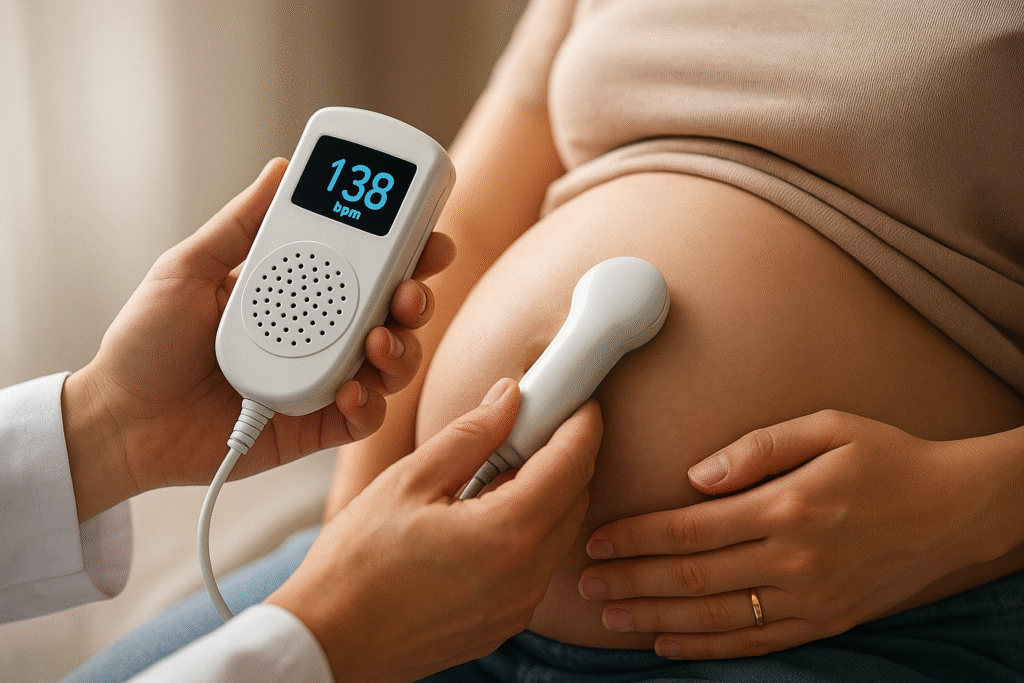
- Use the digital display if your device has one—it will show the detected rate, helping confirm if you’re hearing baby (higher number) or yourself (lower number)
Many fetal doppler safety guides include audio samples comparing maternal and fetal heartbeats. Listening to these examples before your first monitoring session can help train your ear to recognize the differences.
What should I do if I can’t find my baby’s heartbeat during home monitoring?
If you cannot detect your baby’s heartbeat during home baby heartbeat monitoring, try to remain calm—this is a common experience that usually doesn’t indicate a problem. First, verify you’re using the correct technique: apply plenty of ultrasound gel, position the probe at the appropriate location for your gestational age, and move it very slowly in small increments. Try different angles and positions, including lying on your side or with a full bladder to push your uterus upward.
If still unsuccessful after 10 minutes:
- Take a break and try again later—baby may change position
- Check battery levels and ensure your device is functioning properly
- Review your user manual for troubleshooting tips
- Remember that factors like anterior placenta placement, maternal body composition, and gestational age significantly affect detection
Most importantly, don’t continue trying for extended periods as this can increase anxiety. If you’ve had previous successful monitoring sessions and suddenly cannot find the heartbeat, or if you notice decreased fetal movement, contact your healthcare provider for guidance. They can provide professional monitoring for reassurance. Remember that home dopplers have limitations and cannot replace medical care—they’re meant to complement, not substitute for, regular prenatal appointments.
How accurate are home fetal dopplers for baby heartbeat monitoring compared to medical devices?
Home fetal dopplers vary considerably in accuracy when compared to medical-grade equipment used for professional baby heartbeat monitoring. While both use similar technology, medical devices typically offer:
- Higher sensitivity for earlier and more reliable detection
- Better signal processing to filter out background noise
- More consistent readings across various maternal body types
- Higher frequency range options (2-3MHz for general use, 4-8MHz for early detection)
- More powerful speakers and amplification systems
Consumer-grade dopplers typically detect heartbeats 2-4 weeks later in pregnancy than medical equipment. Their accuracy also depends significantly on the specific model—prices ranging from $30 to $300 reflect substantial quality differences. Higher-end home units approach medical accuracy, while budget models may provide inconsistent results.
When choosing a home doppler, consult the fetal doppler safety guide for recommendations on FDA-registered devices. Look for models with:
- Digital heart rate display
- Clear audio output
- Built-in recording capabilities
- Consistent positive reviews
- Multiple probe options
Remember that even with a high-quality device, user technique significantly affects accuracy. Improper positioning, insufficient gel, or moving too quickly can all lead to missed heartbeats or inaccurate readings. For the most reliable results, consider having your healthcare provider demonstrate proper use during a prenatal visit.