

This post may contain Affiliate links. If you buy anything via the link, I will earn a small commission without any effect on your payment. Thank you for your support.
Understanding Positive Discipline Strategies – What Every Parent Should Know
Are you struggling to guide your child’s behavior without resorting to punishment? You’re not alone. Millions of parents are seeking better ways to teach their children responsibility and respect. positive discipline strategies offer an effective alternative to traditional disciplinary approaches, focusing on mutual respect, understanding, and long-term solutions rather than quick fixes through punishment.
In this comprehensive guide, you’ll discover practical techniques to nurture cooperation, build stronger family bonds, and foster your child’s emotional intelligence—all without the negative side effects of punitive discipline. Whether you’re parenting a toddler having tantrums or a school-aged child testing boundaries, these evidence-based methods will transform your approach to guidance and correction.
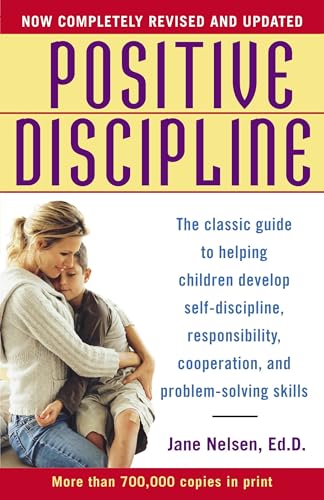
For twenty-five years, Positive Discipline has been the gold standard reference for grown-ups working with children. Now Jane Nelsen, distinguished psychologist, educator, and mother of seven, has written a revised and expanded edition. The key to positive discipline is not punishment, she tells us, but mutual respect. Nelsen coaches parents and teachers to be both firm and kind, so that any child–from a three-year-old toddler to a rebellious teenager–can learn creative cooperation and self-discipline with no loss of dignity. Inside you’ll discover how to
• bridge communication gaps
• defuse power struggles
• avoid the dangers of praise
• enforce your message of love
• build on strengths, not weaknesses
• hold children accountable with their self-respect intact
• teach children not what to think but how to think
• win cooperation at home and at school
• meet the special challenge of teen misbehavior
“It is not easy to improve a classic book, but Jane Nelson has done so in this revised edition. Packed with updated examples that are clear and specific, Positive Discipline shows parents exactly how to focus on solutions while being kind and firm. If you want to enrich your relationship with your children, this is the book for you.”
–Sal Severe, author of How to Behave So Your Children Will, Too!
What is Positive Discipline Strategies?
positive discipline strategies are parenting approaches that focus on teaching and guiding children through cooperation and mutual respect rather than punishment and control. Based on the work of Alfred Adler and Rudolf Dreikurs, these techniques aim to develop children’s internal motivation to behave appropriately by understanding the purpose behind misbehavior.
Unlike traditional discipline that relies on reward and punishment, positive discipline:
- Teaches valuable social and life skills
- Encourages self-discipline and responsibility
- Shows respect for both the child and adult
- Focuses on solutions rather than blame
- Builds a child’s sense of capability and worth
respectful discipline methods like these acknowledge that children are still developing and learning, and that mistakes are valuable opportunities for growth rather than reasons for punishment.
Why Positive Discipline Strategies Matter for Your Child’s Development
Implementing positive discipline strategies significantly impacts your child’s cognitive, emotional, and social development. Research shows that children raised with positive discipline tend to:
- Develop stronger self-regulation skills
- Show higher emotional intelligence
- Experience better mental health outcomes
- Form healthier relationships with peers and adults
- Demonstrate more advanced problem-solving abilities
Traditional punitive discipline often achieves short-term compliance through fear, but it fails to teach children the skills they need for long-term success. When children understand the “why” behind rules and expectations, they’re more likely to internalize these values and make better choices independently.
Common Myths About Positive Discipline Strategies
Many parents hesitate to adopt positive discipline strategies due to misconceptions about this approach:
Myth 1: Positive discipline means no boundaries
Reality: Positive discipline actually establishes clear, firm boundaries—but does so with kindness and respect rather than threats and punishment.
Myth 2: Children won’t learn consequences without punishment
Reality: Children learn more effectively from natural and logical consequences than from arbitrary punishments disconnected from their actions.
Myth 3: Positive discipline takes too much time
Reality: While initially more time-intensive, positive discipline creates long-term efficiency as children develop self-discipline and require less external management.
Myth 4: Positive discipline is permissive parenting
Reality: Permissive parenting lacks boundaries, while positive discipline maintains high expectations within a supportive framework.
Essential Tools & Resources for Positive Discipline Strategies

Must-Have Resources for Positive Discipline Strategies
Implementing effective positive discipline strategies is easier with the right tools at your disposal:
- Family Meeting Materials: A designated notebook, talking stick, and agenda board
- Calm-Down Corner Supplies: Comfortable cushions, sensory toys, and emotion cards
- Visual Aids: Routine charts, behavior expectations posters, and family rules displays
- Time Timer: For setting clear expectations without the stress of traditional timeouts
- Emotion Coaching Cards: To help children identify and verbalize their feelings
- Problem-Solving Tools: Solution wheels, conflict resolution scripts, and choice cards
These resources provide structure and consistency, making it easier for both parents and children to navigate challenging behaviors constructively.
Optional but Helpful Items
Beyond the essentials, these supplementary tools can enhance your positive discipline approach:
- Positive Parenting Apps: Digital tools that offer reminders, strategies, and tracking
- Family Contribution Charts: More empowering than traditional “chore charts”
- Emotion Regulation Toys: Stress balls, fidget toys, and sensory bottles
- Reflection Journals: Age-appropriate journals for older children
- Parenting Book Library: Resources for continued learning and strategy development
- Special Time Timer: For dedicated one-on-one connection time
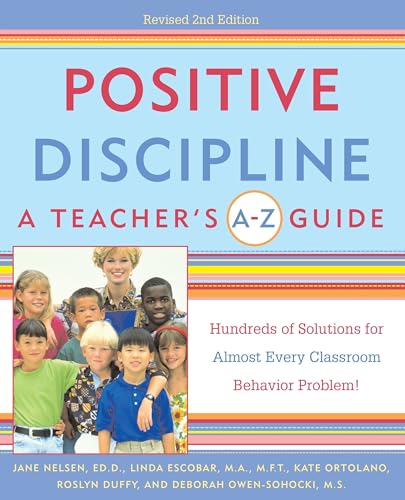
Take back the classroom and make a positive difference in your students’ lives.
Many teachers today are facing problems and discipline issues they never dreamed of when they decided to become teachers. Combine violence, behavioral disorders, and downright defiant attitudes from students with the age-old problems of bullying, poor attendance, and more, and the mix is positively lethal. However, there are effective, positive strategies for restoring order and turning the teacher-student relationship into one of mutual respect.
Applicable to all grade levels, this comprehensive A to Z guide addresses modern-day problems and practical solutions for establishing an effective learning environment. Inside, you’ll discover:
• The 17 fundamental tools of positive discipline
• Real-life stories of proven positive discipline strategies
• Suggestions for establishing and maintaining respectful, nurturing relationships with students
• And much more!
“Overcome obstacles and get back to why you became a teacher in the first place: to empower students with confidence, self-respect, and resourcefulness.”
—Bill Scott, principal, Birney Elementary School, Murietta, Georgia
“An inspiring, information-packed book. All teachers—from those just beginning to those with many years of experience—will find the tools of positive discipline easy to use.”
—Phillip Harris, Ed.D., director, Center for Professional Development and Services, Phi Delta Kappa International
Budget-Friendly Alternatives
Effective respectful discipline methods don’t require expensive materials. Consider these affordable options:
| Commercial Product | DIY Alternative | Approximate Savings |
|---|---|---|
| Emotion Flashcards ($25) | Homemade emotion cards using magazine pictures | $20+ |
| Time Timer ($30) | Visual timer app or homemade timer | $25+ |
| Calm Down Kit ($45) | Self-created kit with household items | $35+ |
| Routine Chart System ($40) | Hand-drawn charts on poster board | $35+ |
| Parenting Books ($20+ each) | Library loans or e-book subscriptions | $100+ annually |
Remember, the most important “tools” for positive discipline are consistency, empathy, and patience—all of which are completely free.
Guide to Implementing Positive Discipline Strategies
Preparation Steps
Before implementing positive discipline strategies, take these important preparatory steps:
Self-reflection: Examine your own discipline history and triggers. Understanding how you were disciplined helps identify patterns you might unconsciously repeat.
Set realistic expectations: Recognize age-appropriate behaviors and adjust your expectations accordingly. A toddler’s developmental capabilities differ significantly from a school-aged child’s.
Create a family values statement: Work together to identify 3-5 core values that will guide your family’s behavior standards.
Prepare your environment: Organize your home to minimize triggers for challenging behaviors. This might include creating designated spaces for activities and reducing visual clutter.
Build your support network: Connect with like-minded parents, join positive parenting communities, and ensure all caregivers understand your discipline approach.
Implementation Process
Follow these steps to effectively implement positive discipline strategies:
Connect before correcting: When challenging behavior occurs, first establish emotional connection through eye contact, physical proximity, and calm communication.
Identify the need behind the behavior: Ask yourself, “What is my child trying to accomplish?” Children often misbehave when fundamental needs aren’t being met.
Use natural and logical consequences: Allow natural consequences when safe (forgetting lunch means being hungry) or implement logical consequences that relate directly to the behavior (drawing on walls means helping to clean them).
Offer limited, meaningful choices: Providing two acceptable options gives children a sense of control while staying within your boundaries.
Problem-solve together: For recurring issues, hold a calm discussion using these steps:
- Describe the problem neutrally
- Brainstorm solutions together
- Choose a solution to try
- Implement and evaluate
Recognize improvement: Acknowledge positive behavior changes specifically (“You remembered to put your shoes away!”) rather than with generic praise.
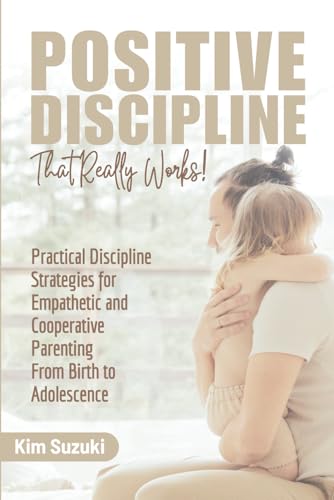
”As a parent, these are the 3 things I value the most :
1. Creating a harmonious home atmosphere.
2. Nurturing the healthy development of my children.
3. Being present and mindful enough to appreciate every moment spent with them.
And I don’t see discipline as an unfortunate necessity, but as a positive guidance system that takes the whole family towards more of these 3 things.”
– Kim Suzuki
Parenting is full of challenges, but discipline doesn’t have to feel like a constant battle. Positive Discipline That Really Works! offers a fresh approach to raising children that emphasizes understanding, respect, and connection—without compromising on boundaries.
Inside, you’ll discover:
Practical strategies for handling everyday challenges with kindness and patience.
How to validate your child’s emotions while reinforcing consistent boundaries.
Tools to help you stay calm and centered during difficult moments.
Age-specific tips for children of all ages and children with special needs.
Ways to foster cooperation, emotional resilience, and problem-solving skills.
Rooted in respect and empathy, this book is about more than just managing behavior—it’s about building a lasting, positive connection with your child that will help them thrive for the rest of their lives.
If you’re ready to guide your child through Life with compassion, and create a peaceful, respectful family environment, this book is for you.
Troubleshooting Common Issues
Even with the best intentions, parents implementing positive discipline strategies face challenges:
Challenge: Inconsistency between caregivers
Solution: Hold regular “parenting meetings” to align on approaches, and create a simple reference guide of agreed-upon responses to common behaviors.
Challenge: Child seems to “test” new approaches
Solution: This is normal! Maintain consistency through the testing phase, which typically lasts 1-2 weeks as children verify you’re serious about the new approach.
Challenge: Emotional reactivity (yours)
Solution: Develop a personal calm-down plan. It’s okay to say, “I need a moment to think before I respond.”
Challenge: Regression during stress or transitions
Solution: Temporarily simplify expectations during major life changes while maintaining core boundaries.
Top 5 Benefits of Positive Discipline Strategies for Children & Parents
Developmental & Health Benefits for Children
Implementing positive discipline strategies provides these crucial benefits:
Enhanced Emotional Intelligence: Children learn to identify, express, and manage their emotions effectively, developing crucial self-regulation skills that benefit them throughout life.
Stronger Executive Function: Problem-solving opportunities build executive functioning skills, including impulse control, flexible thinking, and working memory—abilities linked to academic and career success.
Healthier Stress Response: Unlike punitive discipline that triggers stress hormones, positive approaches create a sense of safety that supports healthy neurological development.
Improved Social Skills: Children develop genuine empathy, cooperation, and conflict resolution abilities rather than compliance based on fear.
Greater Resilience: By experiencing supportive guidance through mistakes, children develop a growth mindset and the confidence to tackle challenges.
Advantages for Parents
Parents who employ respectful discipline methods experience significant benefits:
Reduced parental stress: When discipline becomes teaching rather than controlling, parents report lower frustration and anxiety levels.
Stronger parent-child relationships: Positive approaches preserve and strengthen connection, even during challenging moments.
Greater parenting confidence: A consistent framework provides clarity on how to respond, reducing second-guessing.
Fewer power struggles: When children feel respected and understood, they’re less likely to engage in opposition for its own sake.
Long-term effectiveness: While punitive methods often require escalating consequences, positive strategies create sustainable change.
Long-Term Impact on Family Wellbeing
The benefits of positive discipline strategies extend far beyond immediate behavior management:
Family harmony: Homes become more peaceful as communication improves and conflict resolution skills develop.
Generational change: Children raised with positive discipline are more likely to parent their own children with similar respect.
Stronger sibling relationships: When parents model respectful problem-solving, siblings learn these skills with each other.
More joyful parenting: Many parents report enjoying their children more when discipline isn’t characterized by punishment and power struggles.
Lifelong values transmission: Children internalize family values more effectively when they’re taught through positive guidance rather than enforcement.
Expert Tips, Alternative Methods & Age-Specific Advice
Tips for Toddlers (1-3 Years)
Toddlers require specialized positive discipline strategies that consider their developmental capabilities:
Prevention is key: Structure the environment to minimize temptations and maximize success.
Use distraction and redirection: “You can’t draw on the walls, but you can draw on this paper.”
Simplify language: Use short, clear phrases rather than lengthy explanations.
Validate emotions while setting limits: “You’re angry. Hitting hurts. Show me gentle hands.”
Offer acceptable choices: “Do you want to put on your shoes or shall I help you?”
Use visual cues: Picture schedules and visual reminders help toddlers understand expectations.
Model desired behavior: Demonstrate what you want to see, as toddlers learn primarily through observation.
Adjustments for School-Aged Children (4+ Years)
As children mature, positive discipline strategies can evolve:
Implement family meetings: Regular gatherings to discuss family business, solve problems, and acknowledge contributions.
Develop mutual agreements: Collaborate on family rules and consequences rather than imposing them.
Use reflective questioning: “What happened? What were you feeling? What could you try next time?”
Teach problem-solving frameworks: Provide step-by-step approaches children can internalize for conflict resolution.
Assign responsibilities, not chores: Frame household contributions as meaningful participation rather than obligatory tasks.
Practice do-overs: When behavior misses the mark, offer the chance to try again more successfully.
Create written plans for recurring issues: Collaboratively develop strategies for challenging situations.
Alternative Methods & Different Parenting Styles
Various parenting philosophies incorporate respectful discipline methods with different emphases:
Conscious Parenting: Focuses on parental self-awareness and healing to break intergenerational cycles.
Authoritative Parenting: Balances high expectations with high responsiveness and emotional warmth.
Attachment Parenting: Emphasizes consistent responsiveness and physical closeness to build secure attachment.
Montessori Approach: Centers on prepared environments and respect for children’s natural development and autonomy.
Gentle Parenting: Prioritizes empathy and understanding while maintaining necessary boundaries.
While these approaches vary in specific techniques, all share core principles of respect, connection, and developmentally appropriate expectations.
Conclusion
Implementing positive discipline strategies represents a fundamental shift in how we understand the parent-child relationship. Rather than controlling children through punishment and reward, these approaches empower them to develop internal motivation, emotional intelligence, and genuine cooperation.
The journey toward positive discipline isn’t always smooth—you’ll face challenges, moments of uncertainty, and occasional backsliding into old patterns. Remember that this approach requires patience not just with your child, but also with yourself as you develop new parenting muscles.
The research is clear: children raised with positive discipline strategies demonstrate better emotional regulation, stronger social skills, and higher academic achievement. More importantly, they maintain closer relationships with parents through adolescence and beyond.
By choosing connection over control and teaching over punishment, you’re not just solving today’s behavior challenges—you’re investing in your child’s lifelong social and emotional wellbeing while building a family culture of mutual respect and understanding.
Ready to transform your family’s approach to discipline? Start by implementing just one positive strategy this week, and build from there. Small, consistent changes lead to remarkable results over time.
Share your experience with positive discipline in the comments below! What strategies have worked best for your family?
FAQs
What’s the difference between positive discipline strategies and permissive parenting?
This is perhaps the most common misconception about positive discipline strategies. Positive discipline is neither permissive nor punitive—it occupies the balanced middle ground of authoritative parenting. While permissive parenting lacks clear boundaries and expectations, positive discipline maintains firm limits but implements them with kindness and respect.
The key difference lies in structure and accountability. Permissive parents typically avoid confrontation and let children dictate terms, while parents using positive discipline strategies establish clear expectations and follow through with consistent, logical consequences. Rather than abandoning standards, positive discipline teaches children to meet high expectations through guidance, problem-solving, and natural consequences instead of punishment.
For example, a permissive parent might repeatedly ask a child to stop jumping on furniture with no follow-through, while a parent using positive discipline would clearly state the boundary once and then implement a logical consequence if needed, such as redirecting the jumping to an appropriate location or temporarily removing access to the furniture.
How long does it take to see results from positive discipline strategies?
When implementing positive discipline strategies, patience is essential. Initial results typically emerge in stages, with different timelines for different aspects of behavior:
Short-term (1-2 weeks): You may first notice improvements in your own responses to challenging behavior—less reactivity, greater clarity, and more consistency.
Medium-term (2-6 weeks): Children often test new boundaries during this period, sometimes escalating behaviors to see if you’ll revert to old patterns. Despite this testing phase, you’ll likely observe decreased intensity and duration of challenging behaviors.
Long-term (1-3 months): Significant, stable improvements typically emerge, including better cooperation, improved communication, and more independent problem-solving.
Factors affecting this timeline include the child’s age, temperament, previous discipline approaches, and consistency of implementation across caregivers. Most parents report that positive discipline strategies initially require more time and effort than punitive methods but ultimately create more sustainable improvements with less parental intervention needed over time.
Can positive discipline strategies work for children with special needs?
positive discipline strategies are particularly beneficial for children with special needs, though they often require thoughtful adaptation. The emphasis on understanding behavior as communication, focusing on teaching rather than punishing, and providing clear structure aligns perfectly with evidence-based approaches for neurodivergent children.
For children with ADHD, autism, sensory processing differences, or other neurodevelopmental conditions, consider these modifications:
- Increase visual supports: Use pictures, written instructions, and visual schedules extensively
- Break skills into smaller steps: Teach and acknowledge incremental progress
- Adapt expectations: Align demands with the child’s actual capabilities, not chronological age
- Extend processing time: Allow longer wait times for responses
- Incorporate special interests: Use motivating topics as teaching tools
- Provide sensory accommodations: Consider sensory needs when setting boundaries
positive discipline strategies focus on working with a child’s natural development rather than forcing compliance, making them ideal for children who experience the world differently. Many parents of neurodivergent children report that these approaches significantly reduce meltdowns and challenging behaviors while building crucial life skills.
What if my partner disagrees with positive discipline strategies?
Parental disagreement about discipline approaches is common and can undermine the effectiveness of positive discipline strategies. Here are steps to address this challenge:
Focus on common goals: Most parents share fundamental desires for their children—happiness, responsibility, kindness—even when they disagree on methods. Start by identifying these shared values.
Share research gently: Rather than presenting information as “proof” your partner is wrong, share articles or book passages as something you’re learning about together.
Suggest a trial period: Propose implementing positive discipline strategies consistently for 30 days to evaluate results together.
Start small: Begin with one specific situation rather than overhauling all discipline approaches immediately.
Consider a parenting class or therapist: A neutral third party can often explain concepts in ways both parents can accept.
Remember that many parents, particularly those raised with traditional discipline, worry that positive approaches lack accountability. Emphasize that positive discipline strategies maintain high standards while teaching skills more effectively than punishment. With patience and respect for different perspectives, most couples can move toward more unified parenting approaches.
How can I implement positive discipline strategies when I’m exhausted or overwhelmed?
Implementing positive discipline strategies during times of parental fatigue is challenging but possible with these practical approaches:
Create a simple script for challenging moments: Prepare 2-3 standardized responses for common situations so you don’t need to think creatively when depleted.
Prioritize self-regulation: Recognize that when you’re exhausted, your primary goal is managing your own response rather than perfectly executing positive discipline techniques.
Implement a “pause button phrase”: Use a consistent phrase like “I need to think about this” that buys time when you’re too tired to respond thoughtfully.
Establish minimum standards: Identify your non-negotiable principles that you’ll maintain even when exhausted, while letting go of perfection.
Build a support network: Arrange regular breaks and backup care to prevent reaching extreme exhaustion.
Practice self-compassion: Acknowledge that implementing positive discipline strategies perfectly 100% of the time isn’t realistic.
Remember that repair after imperfect moments actually provides valuable modeling. When you lose your cool and then circle back to apologize and problem-solve, you’re teaching your child important skills about managing emotions and relationships. The goal isn’t flawless implementation but consistent effort and willingness to reconnect after disconnection.