This post may contain Affiliate links. If you buy anything via the link, I will earn a small commission without any effect on your payment. Thank you for your support.
Introduction
As a parent, watching your baby grasp their first toy or successfully reach for your face is nothing short of magical. These milestone moments are early signs of developing baby hand-eye coordination – a critical foundation for your child’s future skills. Did you know that by 8 months, most babies can transfer objects from one hand to another, demonstrating remarkable progress in their infant motor skills?
Whether you’re a first-time parent or seasoned caregiver, understanding and nurturing this development is crucial for your baby’s growth. In this comprehensive guide, we’ll explore effective activities, essential supplies, and expert tips to boost your baby’s coordination skills. You’ll discover age-appropriate exercises, common misconceptions, and practical advice to support your little one’s developmental journey with confidence.
Understanding Baby Hand-Eye Coordination – What Every Parent Should Know

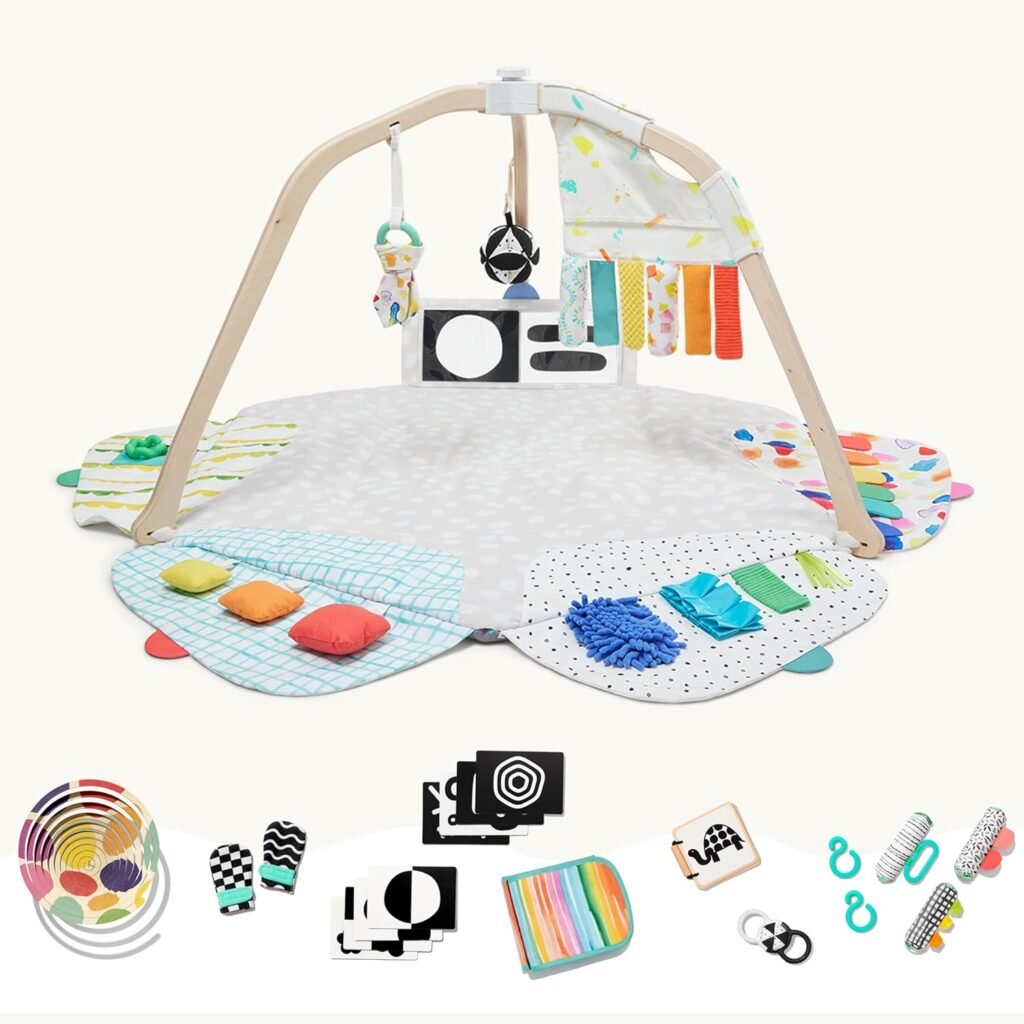
- THE BEST BABY SHOWER GIFT: Thoughtfully crafted with parents and babies in mind, this baby registry must-have combines a…
- SENSORY STRANDS INCLUDED: Traditionally sold as an add-on, the Sensory Strands for The Play Gym offer captivating colors…
- LEARN THROUGH PLAY: Every item from The Looker Play Kit is crafted to help babies build new skills through sensory-rich,…
- WHAT’S INCLUDED: The Lovevery Newborn Gift Set comes with our award-winning Play Gym, Sensory Strands, and The Looker Pl…
- WAKE TIME ACTIVITIES: The Looker Play Kit offers specially curated items to keep newborns engaged during their alert per…
What is Baby Hand-Eye Coordination?
Baby hand-eye coordination refers to the brain’s ability to process visual information and direct the hands to perform tasks based on what the eyes see. This complex neurological process begins developing shortly after birth and continues refining throughout childhood. Initially, newborns have limited visual capabilities and random hand movements. As their vision improves and brain connections strengthen, babies gradually gain control over their hands in response to visual stimuli.
By 3 months, infants begin batting at objects, and by 9-10 months, many can pick up small items using their thumb and forefinger (pincer grasp). This coordination development happens through a combination of neurological maturation and repeated practice, making everyday interactions and play crucial for skill building.
Why Baby Hand-Eye Coordination Matters for Your Baby’s Development
Baby hand-eye coordination serves as a fundamental building block for numerous higher-level skills your child will need throughout life. This essential capability:
- Forms the foundation for fine motor skills needed for writing, drawing, and self-care
- Enables successful feeding, first with assisted spoon-feeding and later self-feeding
- Contributes to cognitive development through object manipulation and exploration
- Supports spatial awareness and depth perception
- Builds neural pathways that enhance overall brain development
- Prepares children for future academic skills like reading and mathematics
- Facilitates independent play and creative expression
Research shows that babies with well-developed coordination tend to reach other developmental milestones more easily. Additionally, these early coordination activities create valuable bonding opportunities between parent and child, supporting emotional and social development alongside physical skills.

- Interactive Fun: Enjoy hours of entertainment as this dancing cactus toy sings, talks, records voices, and mimics sounds…
- Educational Development: Designed to stimulate hand-eye coordination, auditory recognition, and tactile senses, this toy…
- Soft and Safe: Crafted from non-toxic, plush cotton materials, this cuddly cactus toy is gentle on baby’s skin, lightwei…
- Multi-Function Entertainment: Beyond singing and talking, the cactus dances to music, repeats sounds, and responds to ch…
- Perfect Gift Choice: Ideal for birthdays, baby showers, Christmas, or any special occasion, this adorable dancing cactus…
Common Myths About Baby Hand-Eye Coordination
Despite its importance, several misconceptions about baby hand-eye coordination persist:
Myth 1: Babies develop coordination naturally without intervention.
While development follows a natural progression, research shows that babies benefit significantly from appropriate stimulation and practice opportunities. Parents who provide coordination-enhancing activities typically see faster skill development.
Myth 2: Coordination problems will resolve on their own.
Minor variations in development timing are normal, but persistent coordination difficulties may indicate underlying issues requiring attention. Early intervention for coordination challenges can prevent cascading developmental delays.
Myth 3: Screen time helps improve coordination.
Contrary to marketing claims, passive screen viewing provides minimal coordination benefits. Three-dimensional, tactile play experiences are far more effective for developing these skills than digital alternatives.
Myth 4: Babies need expensive toys to develop coordination.
Simple household items often make the best coordination toys. Measuring cups, wooden spoons, and fabric swatches provide excellent sensory and coordination practice without specialized equipment.
Essential Items & Supplies for Baby Hand-Eye Coordination
Must-Have Products for Baby Hand-Eye Coordination
The right tools can significantly enhance your baby’s coordination development. Consider these essentials:
| Age Range | Product Type | Benefits | Approximate Price |
|---|---|---|---|
| 0-3 months | High-contrast black and white cards | Stimulates visual tracking and focus | $10-15 |
| 0-6 months | Infant play gym with hanging toys | Encourages reaching and batting | $40-80 |
| 3-9 months | Soft rattles and easy-grip toys | Promotes grasping and transferring | $10-20 |
| 6-12 months | Stacking cups or rings | Develops precision and spatial awareness | $8-15 |
| 9+ months | Simple puzzle boards with large pieces | Enhances problem-solving and grasp-release | $15-30 |
When selecting items, prioritize variety in textures, weights, and sounds to provide diverse sensory experiences. Safety remains paramount—ensure all items are non-toxic, free from small parts, and durable enough to withstand mouthing and dropping.

- 10 Bright Primary colored Rattles/Teethers for different stages of baby’s development.
- Each rattle has different grips, shapes and tasks to assist in fine motor skills.
- Variety of textures will assist in tactile development of touch, taste and smell. Numerous sounds will expand babies’ se…
- Warm gift for baby showers, suitable for nursery child care – easy to clean. And it’s a great stroller toy.
- Recommended Cleaning Method: Wipe W/ a mixture of Vinegar and Water (50/50). Don’t clean them W/ steam, or soak in water…
Optional but Helpful Items
While not essential, these items can further enhance your baby’s coordination development:
- Suction cup toys – Secure to high chair trays for focused play without constant retrieving
- Water play items – Floating toys and cups make bath time a coordination-building opportunity
- Finger puppets – Engage babies while demonstrating hand movements they can imitate
- Textured sensory balls – Offer varied gripping challenges and tactile stimulation
- Baby-safe mirrors – Motivate reaching and movement while building self-awareness
- Pop-up toys – Teach cause-and-effect relationships through button pressing and lid lifting
These supplementary items introduce new challenges as your baby masters basic grasping and reaching, providing continued growth opportunities for advancing infant motor skills.
Budget-Friendly Alternatives
Developing baby hand-eye coordination doesn’t require expensive purchases. Consider these no-cost or low-cost alternatives:
- Empty plastic containers with lids provide excellent stacking and filling practice
- Kitchen utensils like wooden spoons and measuring cups offer safe, interesting shapes to grasp
- Homemade sensory bottles (sealed plastic bottles filled with colored water and objects) encourage tracking
- Fabric scraps of different textures stimulate tactile exploration and finger dexterity
- Cardboard boxes can be transformed into posting games by cutting slots for inserting items
- Paper crumpling activities develop grasping strength and release skills
Creating a rotation of these simple household items maintains novelty while providing rich developmental experiences without straining your budget.
Guide to Baby Hand-Eye Coordination

Preparation Steps
Before beginning coordination activities with your baby, establish these foundations for success:
Create a distraction-free environment with minimal background noise and visual clutter to help your baby focus on the activity at hand.
Observe your baby’s alertness cycles to identify their “ready to learn” periods, typically after waking and feeding when they’re alert but not overstimulated.
Prepare a comfortable play space with proper support—a firm blanket for tummy time, a supportive seat for sitting activities, or your secure lap for younger infants.
Gather age-appropriate materials that match your baby’s current abilities with just enough challenge to maintain interest without causing frustration.
Set realistic time expectations—younger babies may engage for only 2-3 minutes while older infants might enjoy 10-15 minute sessions.
Remember that a relaxed, positive approach yields better results than rigid “practice sessions.” Follow your baby’s cues and be prepared to shift activities based on their interest and energy levels.
Implementation Process
Follow these steps to effectively support your baby’s coordination development:
Start with visual tracking exercises for newborns by slowly moving high-contrast objects horizontally across their field of vision, about 8-12 inches from their face.
Introduce reaching activities around 3 months by positioning toys within grasp during tummy time or when baby is supported in a semi-reclined position.
Demonstrate actions before expecting imitation—show how to bang blocks, shake rattles, or stack cups while narrating what you’re doing.
Practice transfer games around 6-7 months by encouraging your baby to move objects from one hand to another or from their hand to yours.
Incorporate finger foods once baby shows readiness, offering appropriately sized pieces that require pincer grasp (thumb and forefinger) practice.
Introduce container play by showing how objects can go into and out of buckets, boxes, or stacking cups, encouraging both fine motor skills and cognitive understanding.
Progress to targeted activities like large pegboards, shape sorters, or simple puzzles as your baby approaches their first birthday.
Celebrate attempts, not just successes—your positive reaction to their efforts builds confidence and encourages persistence.
Troubleshooting Common Issues
Even well-planned coordination activities can present challenges. Here are solutions to common issues:
Problem: Baby seems frustrated and gives up quickly
Solution: Scale back the difficulty level. If stacking three blocks is overwhelming, start with two. Success builds confidence for greater challenges later.
Problem: Consistent favoring of one hand over the other
Solution: While hand preference eventually develops naturally, encourage bilateral coordination by positioning toys in the midline or toward the less-used hand occasionally.
Problem: Baby loses interest after only a brief period
Solution: Keep sessions short and integrate coordination activities into daily routines rather than creating separate “practice times.” Bathtime, diaper changes, and feeding all offer natural coordination opportunities.
Problem: Difficulty with grasp-and-release actions
Solution: Try varied textures and sizes. Some babies find certain surfaces easier to grip and release. Experiment with fabric, plastic, wood, and rubber to discover preferences.
Problem: Baby consistently mouths objects instead of manipulating them
Solution: This is developmentally appropriate—mouthing is an important exploration method. Offer designated mouthing toys, then demonstrate object manipulation after oral exploration time.
Top 5 Benefits of Baby Hand-Eye Coordination for Baby & Parents
Developmental & Health Benefits for Baby
Investing time in baby hand-eye coordination activities yields significant advantages:
Enhanced brain development: Coordination activities strengthen neural connections between visual processing areas and motor control centers, supporting overall cognitive growth. Studies show that babies with regular coordination practice demonstrate more complex play patterns.
Accelerated self-feeding milestones: Babies with well-developed coordination typically master self-feeding earlier, supporting independence and nutrition. The pincer grasp developed through coordination practice translates directly to successful finger food management.
Improved problem-solving abilities: As babies learn to manipulate objects with increasing precision, they develop cause-and-effect understanding and spatial reasoning. This translates to better problem-solving approaches in other areas.
Refined fine motor precision: Early coordination practice establishes foundations for advanced fine motor skills needed for drawing, writing, and self-care. These neural pathways, once established, continue developing throughout childhood.
Better emotional regulation: The sense of accomplishment from mastering coordination challenges builds frustration tolerance and persistence. Babies learn that effort leads to success, creating positive emotional associations with learning.
These benefits establish critical foundations that support your child’s development across multiple domains simultaneously.
Advantages for Parents
Parents also experience significant benefits when supporting their baby’s coordination development:
- Deepened understanding of your baby’s development as you observe subtle improvements in their capabilities
- Increased confidence in your parenting skills through providing effective developmental support
- Enhanced bonding opportunities through engaged, face-to-face play interactions
- Practical time management as coordination activities can be integrated into everyday routines
- Reduced future concerns about school readiness by establishing strong foundational skills early
- Pride in your child’s accomplishments as you witness their growing mastery
Many parents report that coordination activities provide structured, purposeful ways to engage with their babies, especially during periods when general play ideas feel limited. The concrete nature of these activities offers clear paths for interaction and observable progress.
Long-Term Impact on Family Wellbeing
The benefits of early baby hand-eye coordination extend far beyond infancy:
Children with well-developed coordination typically experience smoother transitions into preschool activities requiring fine motor control. This confidence often translates to greater classroom participation and social engagement. Parents report less stress around developmental milestones when they’ve actively supported coordination skills from infancy.
Families establish valuable patterns of interactive learning that continue through childhood. The habit of turning everyday moments into learning opportunities becomes ingrained, creating a home environment rich with developmental support. This approach often extends to siblings as parents apply these engagement strategies across children of different ages.
Perhaps most importantly, the confidence gained through coordination mastery establishes a positive learning mindset. Children who experience early success through supportive practice develop a growth-oriented approach to challenges, believing in their ability to improve with effort—a mindset that serves them well throughout life’s learning journey.
Expert Tips, Alternative Methods & Age-Specific Advice
Tips for Newborns (0-3 Months)
During these earliest months, focus on building visual foundations for future baby hand-eye coordination:
- Position your face 8-12 inches from your baby during alert periods—your features provide the perfect high-contrast visual stimulus
- Introduce black and white pattern cards, moving them slowly across baby’s visual field to encourage tracking
- Provide supervised tummy time on a firm surface to strengthen neck and shoulder muscles needed for later reaching
- Gently open your baby’s hands during bathing or diaper changes to counteract the natural fist position
- Position mobiles and play gyms where baby can see but not yet touch them to encourage visual focus
- Talk through your activities as you move objects slowly in their line of sight to connect visual experiences with language
- Allow babies to watch your hand movements as you go about daily activities—they learn through observation before direct participation
At this stage, consistency and patience are key—your baby is absorbing tremendous amounts of information even when their physical responses appear limited.
Adjustments for Older Babies & Toddlers (3+ Months)
As your baby’s infant motor skills advance, adapt coordination activities to match their abilities:
4-6 Months:
- Position toys within reaching distance during tummy time
- Offer toys with different textures that are easy to grasp
- Play “give and take” games, gently offering and receiving toys
- Guide their hands to bat at hanging objects if they need encouragement
7-9 Months:
- Create “drop zones” using buckets or boxes where baby can release toys
- Demonstrate clapping and encourage imitation
- Provide opportunities to transfer objects between containers
- Introduce finger foods that require pincer grasp
10-12 Months:
- Set up simple posting games with slots and appropriate objects
- Offer stacking opportunities with blocks or cups
- Encourage pointing at objects in books
- Demonstrate how to use push/pull toys
12+ Months:
- Introduce large crayons and paper for first drawing attempts
- Provide shape sorters with large, easy-to-manipulate pieces
- Create treasure baskets with safe household items to explore
- Begin simple puzzles with knobs or large pieces
Adjust expectations based on your individual child’s development pace—while these guidelines follow typical milestones, every baby progresses at their unique rate.
Alternative Methods & Different Parenting Styles
Various parenting approaches offer valuable perspectives on developing baby hand-eye coordination:
Montessori Approach:
- Emphasizes freedom of movement and self-directed activity
- Recommends simple, realistic toys made from natural materials
- Focuses on practical life skills like pouring and transferring
- Creates accessible environments where babies can choose activities
RIE (Resources for Infant Educarers) Method:
- Advocates respectful observation before intervention
- Suggests uninterrupted play periods without adult direction
- Recommends simple, open-ended objects rather than electronic toys
- Emphasizes allowing babies to discover solutions independently
Waldorf Philosophy:
- Prioritizes natural materials and sensory-rich experiences
- Discourages electronic or plastic toys in favor of simple wooden objects
- Emphasizes rhythm and repetition in daily activities
- Incorporates creative play through storytelling and movement
Baby-Led Approaches:
- Integrates coordination development through self-feeding
- Allows babies to explore food textures and self-regulate intake
- Builds pincer grasp naturally through feeding experiences
- Creates practical application of developing coordination skills
Each approach offers valuable insights—many families adopt a blended strategy incorporating elements that resonate with their parenting style and their baby’s temperament.
Conclusion
Developing baby hand-eye coordination is a fascinating journey that unfolds naturally with the right support and encouragement. Through the activities and approaches we’ve explored, you now have a comprehensive toolkit to nurture this crucial developmental skill. Remember that consistency matters more than perfection—even five minutes of focused coordination play several times daily yields significant benefits. Watch for your baby’s cues and adjust activities to match their interest and developmental stage.
The beauty of coordination activities lies in their simplicity—no expensive equipment or specialized training is required, just your attention and engagement. As you implement these strategies, you’re not just building baby hand-eye coordination; you’re establishing neural pathways that support future learning, creating joyful bonding experiences, and laying foundations for independence.
Every baby progresses at their unique pace, so celebrate small improvements rather than comparing to standardized timelines. The coordination journey continues well beyond infancy, building upon these early experiences to support increasingly complex skills. Trust your instincts as you guide your baby’s development, knowing that your loving interaction is the most powerful tool for nurturing their growth.
Have you discovered creative ways to support your baby’s coordination development? Share your experience with baby hand-eye coordination in the comments below! For more developmental support ideas, explore our related article on infant sleep patterns and cognitive development.
FAQs
At what age should babies develop hand-eye coordination?
Baby hand-eye coordination develops gradually, beginning from birth with primitive reflexes and continuing to refine throughout the first two years. Around 3 months, babies typically begin visually tracking objects and making deliberate swipes. By 5-6 months, most can successfully reach and grasp larger objects.
The pincer grasp (using thumb and forefinger) typically emerges around 9-10 months, demonstrating significant coordination refinement. While these timeframes represent average development, individual babies progress at their own pace. Some may show advanced coordination earlier, while others might take longer to develop these skills.
Rather than focusing exclusively on age-based milestones, look for steady progress in your baby’s abilities. If you notice your baby isn’t making coordination attempts by 6 months or shows significant asymmetry in hand use beyond 8 months, consult with your pediatrician. Early intervention for coordination challenges can be highly effective when implemented promptly.
What are the best toys to improve baby hand-eye coordination?
The most effective toys for developing baby hand-eye coordination change as your child grows. For newborns to 3-month-olds, high-contrast black and white cards, unbreakable mirrors, and simple mobiles encourage visual tracking—the foundation of coordination. From 3-6 months, lightweight rattles, soft textured toys, and play gyms with hanging objects promote reaching and grasping.
For babies 6-9 months old, stacking rings, large interlocking blocks, and balls of various sizes and textures encourage more precise manipulation. Babies 9-12 months benefit from shape sorters, simple puzzles with knobs, and containers for filling and emptying. Look for toys that offer multisensory experiences—combining interesting sounds, textures, and visual elements—as these engage multiple brain regions simultaneously.
The best toys are often the simplest ones, allowing babies to explore cause-and-effect relationships without overwhelming stimulation. Always prioritize safety, choosing items that are washable, free from small parts, and durable enough to withstand mouthing and dropping.
How can I tell if my baby has poor hand-eye coordination?
Identifying potential baby hand-eye coordination concerns involves observing several indicators. Watch for significant delays in reaching typical milestones, such as not attempting to reach for objects by 5-6 months or inability to transfer items between hands by 7-8 months. Notice whether your baby consistently misses objects when reaching or shows frustration during activities requiring coordination.
Persistent asymmetry—strongly favoring one hand or exhibiting notably different abilities between hands—warrants attention beyond 7-8 months. Some babies may demonstrate good gross motor skills while struggling with fine motor tasks, or vice versa, indicating uneven development patterns. Other potential signs include difficulty bringing objects to their mouth, problems with self-feeding around 9-12 months, or unusual hand positioning during reach attempts.
Remember that occasional misses and imprecision are normal parts of development. However, if you observe multiple indicators or significant struggles with coordination tasks appropriate for your baby’s age, discuss your observations with your pediatrician. Early identification of coordination challenges allows for timely intervention, which often produces excellent outcomes.
Does tummy time help with hand-eye coordination?
Tummy time significantly contributes to baby hand-eye coordination development through multiple pathways. This position strengthens the neck, shoulder, and core muscles needed to support stable reaching and manipulation. As babies lift their heads during tummy time, they gain improved visual perspectives on their environment, enhancing depth perception crucial for accurate reaching.
When interesting objects are positioned within view, tummy time creates natural opportunities for visual tracking and reaching attempts. The position also frees babies’ hands from supporting their body weight (unlike sitting before core strength develops), allowing exploration and manipulation of objects. Additionally, tummy time helps babies develop bilateral coordination as they learn to support their upper body with one arm while reaching with the other.
For maximum coordination benefits, place age-appropriate toys just within and slightly beyond your baby’s reach during tummy time sessions. Start with brief 1-2 minute sessions several times daily for newborns, gradually increasing duration as your baby becomes more comfortable in this position. Remember that supervised tummy time should always occur when baby is awake and alert, never during sleep periods.
How does hand-eye coordination affect my baby’s future development?
Baby hand-eye coordination serves as a fundamental building block with far-reaching implications for future development. Academically, these early skills directly support writing, drawing, and computer use—all crucial for educational success. Children with well-developed coordination typically transition more easily into self-care skills like dressing, tooth brushing, and feeding, supporting independence and confidence.
In social contexts, coordination enables participation in games, sports, and activities that facilitate peer relationships and team integration. Cognitively, the neural pathways established during early coordination activities create foundations for complex problem-solving, spatial reasoning, and sequential thinking. Research has demonstrated connections between early fine motor proficiency and later mathematical abilities, suggesting shared neural underpinnings.
Additionally, coordination difficulties that persist without intervention can potentially impact self-esteem as children compare their abilities to peers. The good news is that early intervention for coordination challenges is highly effective, and most children respond well to targeted support. By nurturing your baby’s coordination now through regular practice and appropriate challenges, you’re establishing neural architecture that will support diverse skills throughout childhood and beyond.