
This post may contain Affiliate links. If you buy anything via the link, I will earn a small commission without any effect on your payment. Thank you for your support.
Understanding Eco-Friendly Baby Utensils – What Every Parent Should Know
Are you concerned about the materials that come in contact with your baby’s food? You’re not alone. As parents become more environmentally conscious, the demand for eco-friendly baby utensils has skyrocketed. These sustainable alternatives not only protect your little one from potentially harmful chemicals but also help reduce your family’s environmental footprint.
In this comprehensive guide, we’ll explore everything you need to know about choosing and using eco-friendly feeding tools that keep your baby safe while nurturing our planet. From understanding what makes utensils truly eco-friendly to selecting the best options for different developmental stages, we’ve got you covered with expert advice and practical tips.
What Are Eco-Friendly Baby Utensils?
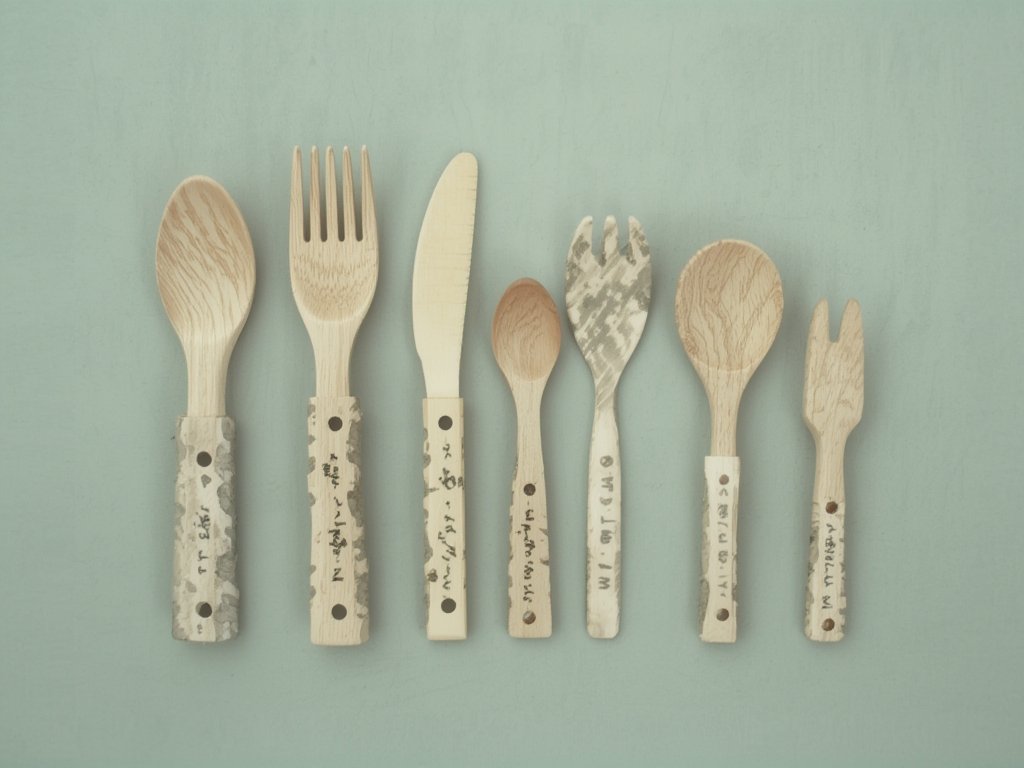
Eco-friendly baby utensils are feeding implements specifically designed for infants and toddlers that are manufactured using sustainable materials and environmentally responsible production methods. Unlike conventional plastic baby utensils, these products are typically made from:
- Organic bamboo
- Food-grade silicone
- Stainless steel
- Plant-based bioplastics
- Recycled or recyclable materials
What sets these products apart is their minimal environmental impact throughout their lifecycle – from production to disposal. Genuine sustainable baby cutlery is free from harmful chemicals like BPA, phthalates, PVC, and lead, ensuring they’re safe for your baby’s developing system.
Why Eco-Friendly Baby Utensils Matter for Your Baby’s Development
The significance of choosing eco-friendly feeding tools extends beyond environmental considerations. These specialized utensils directly impact your baby’s health and development in several important ways:
Reduced chemical exposure: Conventional plastic utensils often contain chemicals that can leach into food, especially when heated. Eco-friendly baby utensils eliminate this risk.
Sensory development: Natural materials provide different textures and sensations compared to plastic, which can enhance your baby’s sensory development during feeding.
Early environmental awareness: Using sustainable products from infancy establishes environmental consciousness as a family value from the earliest stages.
Durability and longevity: Quality eco-friendly options often outlast plastic alternatives, reducing waste and teaching the value of investing in lasting products.
By choosing these thoughtful alternatives, you’re not only protecting your child from potential chemical exposure but also supporting their holistic development.
Common Myths About Eco-Friendly Baby Utensils
Despite growing popularity, several misconceptions continue to surround eco-friendly baby utensils. Let’s address and debunk the most common myths:
Myth 1: They’re too expensive
While the initial investment may be higher than conventional plastic options, quality eco-friendly utensils last significantly longer, making them more cost-effective in the long run.
Myth 2: They’re not as hygienic
Many natural materials like bamboo actually have inherent antibacterial properties. Additionally, high-quality eco-friendly baby utensils are designed to be dishwasher safe and easy to clean.
Myth 3: They break easily
Modern eco-friendly options are engineered for durability and child use. Materials like bamboo can be surprisingly resilient, while silicone offers flexibility without breaking.
Myth 4: They don’t work as well for feeding
Today’s sustainable baby cutlery is designed with developmental appropriateness in mind, featuring ergonomic handles and baby-friendly shapes that support self-feeding skills.
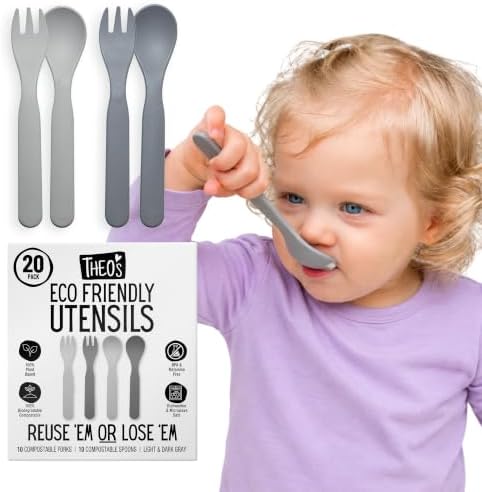
- Eco-Friendly and Safe: THEO’S eco friendly utensils for baby are crafted from plant-based materials with no harmful addi…
- Ergonomic Design: Perfect for self-feeding beginners, these eco friendly baby spoons and forks are designed with small h…
- Reuse ‘Em or Lose ‘Em: THEO’S disposable toddler utensils are 33% heavier than standard options, offering durability tha…
- Made With Parents in Mind: THEO’S baby disposable spoons are designed by parents, for parents. Simplify family dining ex…
- Minimal Modern Design: Say goodbye to loud, baby-themed colors. THEO’S utensils come in neutral light and dark gray tone…
Essential Items & Supplies for Eco-Friendly Baby Utensils
Must-Have Products for Eco-Friendly Baby Utensils
When building your collection of eco-friendly baby utensils, certain essential items should form the foundation of your sustainable feeding arsenal:
- Soft-tipped silicone spoons: Perfect for first foods and sensitive gums
- Bamboo training utensils: Lightweight and ideal for beginning self-feeders
- Stainless steel toddler cutlery: Durable options for more experienced eaters
- Plant-based bowls with suction bases: Prevents tipping while being environmentally friendly
- Silicone bibs with food catchers: Reduces food waste and plastic bib disposal
These foundational items cover the basics for feeding from first purees through the toddler years. Look for products with minimal packaging and transparent sourcing information for truly sustainable options.
Optional but Helpful Items
Beyond the essentials, these supplementary eco-friendly feeding tools can enhance your baby’s mealtime experience:
- Bamboo divider plates: Helps with portion control and food separation
- Silicone placemats: Creates a hygienic eating surface while reducing disposable placemat waste
- Wooden finger food picks: Encourages self-feeding of small items without plastic waste
- Hemp or organic cotton food pouches: Reusable alternatives to single-use puree pouches
- Beeswax or silicone food wraps: Sustainable alternative to plastic wrap for storing leftovers
These optional items complement your core eco-friendly baby utensils collection while further reducing your environmental impact during feeding time.
Budget-Friendly Alternatives
Creating a sustainable feeding setup doesn’t have to break the bank. Consider these budget-conscious approaches to eco-friendly feeding:
- Start with a minimal set: Begin with just 2-3 core items and expand gradually
- Multi-purpose items: Choose products that grow with your child or serve multiple functions
- DIY options: Repurpose appropriate kitchen items you already own
- Secondhand marketplaces: Quality sustainable baby cutlery often appears on resale platforms
- Subscription services: Some companies offer “utensil libraries” or exchange programs
Remember that sustainability isn’t an all-or-nothing proposition. Even replacing a few conventional items with eco-friendly alternatives makes a meaningful difference for both your baby and the planet.
Guide to Eco-Friendly Baby Utensils
Preparation Steps
Before introducing eco-friendly baby utensils to your little one, proper preparation ensures both safety and longevity:
Initial cleaning: Wash all new utensils thoroughly with hot, soapy water before first use, even if packaging indicates they’re pre-sanitized.
Material conditioning: For wooden or bamboo utensils, consider applying a light coating of food-grade mineral oil to prevent drying or cracking.
Safety inspection: Check all items for rough edges, splinters, or manufacturing defects before use.
Storage setup: Create a dedicated, clean storage space for your eco-friendly baby utensils to prevent contamination.
Temperature testing: Before using with hot foods, test how different materials conduct heat to prevent mouth burns.
Taking these preparatory steps ensures your sustainable feeding tools remain safe, hygienic, and durable through months of regular use.

- 𝗦𝘁𝗲𝗮𝗺𝗶𝗻𝗴 𝗮𝗻𝗱 𝗕𝗹𝗲𝗻𝗱𝗶𝗻𝗴 𝗶𝗻 𝗢𝗻𝗲: The height of the blender container is 4.13 inches, and the outer diameter is 4.17 inches….
- 𝗡𝘂𝘁𝗿𝗶𝗲𝗻𝘁-𝗣𝗿𝗲𝘀𝗲𝗿𝘃𝗶𝗻𝗴 𝗦𝘁𝗲𝗮𝗺𝗶𝗻𝗴 𝗕𝗮𝘀𝗸𝗲𝘁: The elevated design of our steaming basket enables true steam cooking, minimizing n…
- 𝗧𝘄𝗼 𝗠𝗶𝘅𝗶𝗻𝗴 𝗠𝗼𝗱𝗲𝘀: This baby food steamer and blender simplifies starting solids and everyday baby meal prep with smart d…
- 𝗧𝗿𝗶𝘁𝗮𝗻-𝗕𝗮𝗯𝘆 & 𝗧𝗼𝗱𝗱𝗹𝗲𝗿-𝗦𝗮𝗳𝗲 𝗠𝗮𝘁𝗲𝗿𝗶𝗮𝗹:The GROWNSY baby food processor bowl is made from high-grade, heat-resistant Tritan,…
- 𝗧𝗵𝗼𝘂𝗴𝗵𝘁𝗳𝘂𝗹 𝗚𝗶𝗳𝘁 & 𝗘𝘅𝗰𝗲𝗹𝗹𝗲𝗻𝘁 𝗖𝘂𝘀𝘁𝗼𝗺𝗲𝗿 𝗖𝗮𝗿𝗲: Ideal for baby shower gifts, Mother’s Day, Thanksgiving, or Christmas, our ba…
- Complete Components & Easy Setup:Please refer to the included user manual to check all components and follow the setup i…
- Customized Food Preparation for Better Blending Results:For best use experience, prepare ingredients by cutting them int…
- Steam & Blend Tips for Better Results:Follow the recommended water level, ingredient preparation, and operating steps in…
Implementation Process
Follow these step-by-step guidelines to successfully introduce and maintain your eco-friendly baby utensils:
Match utensils to developmental stage: Begin with soft silicone spoons for first foods, progressing to training utensils as self-feeding skills develop.
Introduce one item at a time: Allow your baby to become familiar with each new utensil before adding more options.
Demonstrate proper use: Show your baby how to hold and use each utensil through modeling.
Maintain consistent cleaning routines: Establish a regular sanitizing schedule appropriate to your chosen materials.
Monitor for wear and tear: Regularly inspect items for damage and replace when necessary.
Adjust as skills develop: Gradually introduce more sophisticated sustainable baby cutlery as your child’s dexterity improves.
This progressive approach allows for a smooth transition through different feeding stages while maintaining your commitment to sustainable practices.
Troubleshooting Common Issues
Even with the best eco-friendly baby utensils, challenges can arise. Here are solutions to the most frequent problems:
| Issue | Solution |
|---|---|
| Bamboo splintering | Sand gently with fine sandpaper and reapply food-grade oil |
| Staining on silicone | Soak in baking soda solution or expose to sunlight |
| Silicone retaining odors | Boil with lemon juice or bake at low temperature |
| Metal utensils causing rejection | Warm slightly before use or try silicone-tipped alternatives |
| Suction bases losing grip | Clean both surfaces with vinegar solution before use |
| Mold in wooden items | Thoroughly dry after washing; sanitize with hydrogen peroxide |
With proper care and these troubleshooting techniques, your eco-friendly baby utensils should provide durable, reliable service throughout your baby’s feeding journey.

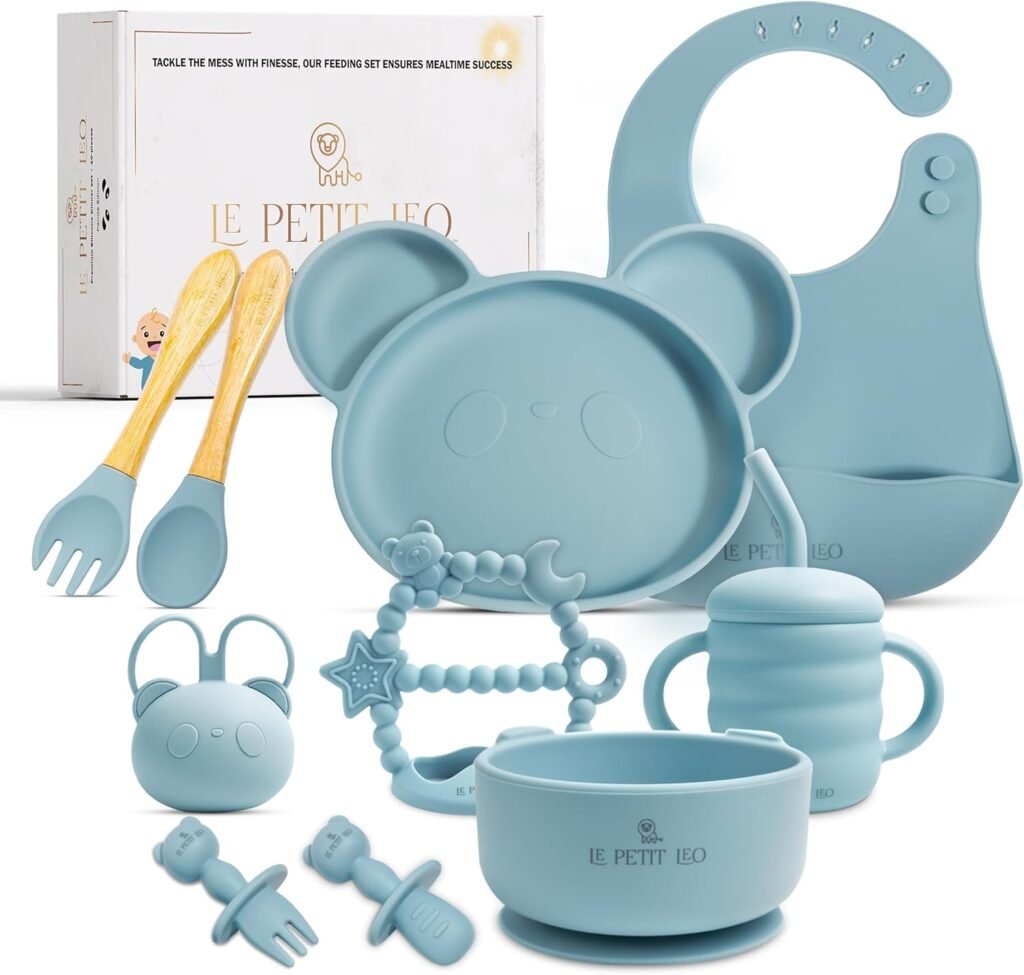
- 🐼 UNCOMPROMISING SAFETY FOR YOUR BABY’S FIRST BITES: The perfect choice for your baby’s safety and well-being. Rigorousl…
- 🐼 ALL-IN-ONE BABY FEEDING SET THAT GROWS WITH YOUR BABY: This premium silicone baby feeding set has been thoughtfully de…
- 🐼 TURN MESSY MEALTIMES INTO HAPPY MOMENTS: Make mealtimes calmer and cleaner with our complete Silicone Baby Feeding Set…
- 🐼 PREMIUM BABY FEEDING ESSENTIALS – SAFE, STRONG & EASY-CLEAN: Dishwasher, microwave and freezer safe, our silicone plat…
- 🐼 GIFT-READY LUXURY BABY FEEDING SET with Le Petit Leo’s Silicone Baby Feeding Set!. Designed for the modern parents, th…
Top 5 Benefits of Eco-Friendly Baby Utensils for Baby & Parents
Developmental & Health Benefits for Baby
The advantages of eco-friendly baby utensils extend far beyond environmental concerns, providing significant developmental and health benefits:
Chemical-free mealtime: Natural materials eliminate exposure to endocrine disruptors and other chemicals found in conventional plastics, protecting developing systems.
Enhanced sensory experience: The varied textures of bamboo, silicone, and stainless steel provide rich sensory input during feeding, supporting cognitive development.
Temperature regulation: Natural materials like wood don’t conduct heat like plastic, reducing the risk of mouth burns from hot foods.
Improved grip development: Many eco-friendly baby utensils feature ergonomic designs that better support developing fine motor skills.
Reduced allergenic potential: Natural materials are less likely to trigger sensitivities or allergic reactions compared to chemical-laden plastics.
These developmental advantages make sustainable feeding tools an investment in your baby’s health beyond their environmental benefits.
Advantages for Parents
Parents also reap significant benefits when choosing sustainable baby cutlery:
Peace of mind: Knowing your child’s food isn’t contacting harmful chemicals reduces parental anxiety.
Durability and longevity: Quality eco-friendly options typically outlast plastic alternatives, reducing replacement frequency.
Multi-child use: The durability of sustainable materials means these utensils often last through multiple children.
Alignment with values: For environmentally-conscious parents, these choices create consistency between beliefs and actions.
Aesthetic appeal: Many eco-friendly baby utensils feature beautiful, natural designs that parents appreciate visually.
These parental benefits make the initial investment in quality sustainable feeding tools worthwhile for many families.
Long-Term Impact on Family Wellbeing
The choice to use eco-friendly baby utensils creates ripple effects that benefit the entire family:
Environmental education: Children grow up understanding the importance of sustainable choices from their earliest experiences.
Reduced waste stream: Fewer disposable or broken plastic items enter landfills from your household.
Chemical reduction throughout home: Many families find that starting with baby products leads to broader eco-friendly choices.
Budget benefits over time: While initial costs may be higher, the durability of quality sustainable products creates long-term savings.
Connection to conscious community: Families often find themselves connecting with like-minded parents, building supportive networks.
These holistic benefits demonstrate how seemingly small choices around sustainable baby cutlery can lead to broader positive impacts for families.
Expert Tips, Alternative Methods & Age-Specific Advice
Tips for Newborns (0-3 Months)
While newborns aren’t yet using utensils directly, this is the perfect time to prepare for your sustainable feeding journey:
Research and selection: Use this period to thoroughly research eco-friendly baby utensils options that align with your parenting philosophy.
Registry additions: Add sustainable feeding tools to your baby registry rather than conventional plastic options.
Preparation for breastmilk storage: Consider silicone milk storage bags or glass containers instead of single-use plastic bags.
Start with silicone: For babies showing early interest in mouthing objects, introduce soft silicone spoons as teethers to familiarize them with utensil shapes.
Setting these foundations during the newborn period makes the transition to solid foods with eco-friendly baby utensils much smoother when the time comes.
Adjustments for Older Babies & Toddlers (3+ Months)
As your baby grows, their utensil needs evolve, requiring thoughtful transitions:
6-9 months: Introduce soft silicone or small bamboo spoons during first foods, with parents doing the feeding.
9-12 months: Offer sustainable baby cutlery with chunky, easy-grip handles for beginning self-feeding attempts alongside parent feeding.
12-18 months: Transition to toddler-sized bamboo or stainless steel utensils with appropriate handle sizes for increasing independence.
18+ months: Provide properly sized child versions of adult utensils in sustainable materials to foster proper eating techniques.
Each transition should include a period of demonstrating proper use and supervised practice with the new eco-friendly baby utensils.
Alternative Methods & Different Parenting Styles
Various parenting philosophies approach feeding tools differently while still embracing sustainability:
Baby-Led Weaning: Emphasizes finger foods and minimal utensil use initially. Consider silicone-coated stainless steel options when introducing eco-friendly baby utensils.
Montessori Approach: Favors realistic, appropriately-sized tools from the start. Look for small bamboo or stainless steel options that mimic adult utensils.
Traditional Puree Method: Typically begins with parent feeding. Soft-tipped silicone spoons work well before transitioning to self-feeding tools.
Minimal Approach: Some families prefer limiting baby gear. Focus on multipurpose sustainable baby cutlery that adapts as your child grows.
Regardless of your feeding philosophy, eco-friendly options exist that can support your preferred approach while maintaining environmental consciousness.
Conclusion
The journey to sustainable parenting begins with thoughtful choices like selecting eco-friendly baby utensils that protect both your child and our planet. Throughout this guide, we’ve explored the numerous benefits these products offer – from reducing chemical exposure and enhancing developmental experiences to promoting long-term environmental values in your family.
Remember that transitioning to eco-friendly feeding tools doesn’t have to happen all at once. Even small steps toward sustainability make a difference. Whether you’re drawn to the natural warmth of bamboo, the flexibility of silicone, or the durability of stainless steel, there are eco-friendly baby utensils to suit your baby’s developmental needs and your family’s values.
By investing in quality sustainable baby cutlery, you’re not just making a purchase – you’re making a statement about the world you want your child to inherit. The choices we make today in seemingly small areas like feeding utensils contribute to the larger legacy of environmental stewardship we pass on to the next generation.
We encourage you to start with just one or two quality eco-friendly pieces and build your collection thoughtfully over time. Your baby’s feeding journey provides the perfect opportunity to align your parenting practices with your environmental values.
What eco-friendly feeding tools has your family tried? Share your experience with eco-friendly baby utensils in the comments below!
FAQs
What materials are best for eco-friendly baby utensils?
The best materials for eco-friendly baby utensils include bamboo, food-grade silicone, stainless steel, and plant-based bioplastics. Each offers distinct advantages: bamboo is naturally antibacterial and biodegradable; silicone provides flexibility and longevity without leaching chemicals; stainless steel offers unmatched durability; and plant-based bioplastics provide a renewable alternative to petroleum plastics.
When selecting materials, consider your child’s age and feeding stage. For first foods, soft silicone spoons are gentle on gums. As skills develop, lightweight bamboo utensils support self-feeding attempts, while stainless steel options work well for more experienced toddlers. Many parents find that a combination of eco-friendly baby utensils in different materials serves various feeding needs while maintaining environmental commitments. Always verify that products are certified free from BPA, phthalates, PVC, and lead, regardless of material choice.
How do I properly clean and maintain eco-friendly baby utensils?
Proper cleaning of eco-friendly baby utensils varies by material. For bamboo and wood, wash by hand with mild soap and warm water, then dry immediately to prevent warping or mold growth. Periodically condition with food-grade mineral oil to prevent cracking. Silicone and stainless steel utensils are typically dishwasher-safe, though hand washing may extend their lifespan.
For stubborn stains on silicone, create a paste with baking soda and water, apply to the stained area, and let sit before washing. To remove odors, soak in a solution of one part vinegar to two parts water, or place silicone items in direct sunlight for several hours. Stainless steel utensils may occasionally develop water spots, which can be removed with a vinegar solution. With proper maintenance, quality eco-friendly baby utensils should last through multiple children or years of use by a single child.
At what age should I introduce eco-friendly baby utensils to my child?
Introduction of eco-friendly baby utensils typically aligns with starting solid foods, around 4-6 months. Initially, parents should do the feeding using soft silicone-tipped spoons. Around 6-8 months, allow your baby to explore holding utensils during meals, even if they’re primarily using their hands for eating.
By 9-12 months, many babies show interest in self-feeding attempts. This is an excellent time to introduce training eco-friendly baby utensils with chunky, ergonomic handles designed for developing grip strength. Between 12-18 months, most toddlers can use specially designed child utensils with increasing skill, though messiness remains part of the learning process.
Remember that these age ranges are guidelines – your baby’s readiness and interest should guide your timing. Some babies following baby-led weaning approaches may use utensils later, while others show early interest. The key is providing developmentally appropriate sustainable baby cutlery that supports your child’s current abilities and encourages progression.
Are eco-friendly baby utensils more expensive than conventional options?
While eco-friendly baby utensils often have higher initial costs than conventional plastic alternatives, they typically offer better value over time. Quality sustainable options generally range from $10-30 for a basic set, compared to $5-15 for standard plastic utensils. However, this price comparison doesn’t account for the full cost picture.
The durability of materials like bamboo, silicone, and stainless steel means these products often outlast multiple sets of plastic alternatives that crack, warp, or become chewed and damaged. Many eco-friendly baby utensils can serve through multiple children or be resold when outgrown, further enhancing their value proposition.
To manage costs while maintaining sustainability, consider starting with just 2-3 essential pieces rather than complete sets. Look for multipurpose designs that adapt as your child grows, and explore secondhand marketplaces where quality sustainable baby cutlery is often available at reduced prices. Some companies also offer subscription or exchange programs that can reduce overall expenditure while maintaining eco-friendly standards.
Can eco-friendly baby utensils help with my child’s development?
Yes, eco-friendly baby utensils can significantly support your child’s development across multiple domains. Physically, the varied weights and textures of sustainable materials like bamboo and silicone provide rich sensory input that plastic cannot match, enhancing tactile discrimination skills. Many eco-friendly options feature ergonomic designs that better support the development of proper grip and fine motor control necessary for self-feeding.
Cognitively, using eco-friendly baby utensils helps children understand cause-and-effect relationships as they experiment with different utensils on various foods. The natural variations in sustainable materials also foster adaptability as children learn to adjust their grip and pressure accordingly.
Perhaps most importantly, using sustainable baby cutlery from an early age helps develop environmental consciousness as a core value. As children grow, they absorb the implicit message that making choices to protect our planet matters. This early foundation in sustainability thinking represents an invaluable developmental benefit that extends far beyond mealtime skills, potentially influencing their values and choices throughout life.